
No-wagering bingo and slots in the UK: what the licence register actually shows
 Available in GB
A promotion sold as “no wagering” still has to be paid for somewhere — by somebody. The somebody is the player, the somewhere is the math of the game, and the bridge between them is a single line of text the operator hopes you will not read. £5 stake at 96% RTP returns £4.80 across a thousand spins, give or take variance, and that gap is the house edge doing what it always does. Stripping the wagering requirement off the bonus does not change the arithmetic; it only changes who eats the gap — the operator’s marketing budget, the player on their first session, or nobody, because the bonus is paid as cash and not as bonus credit.
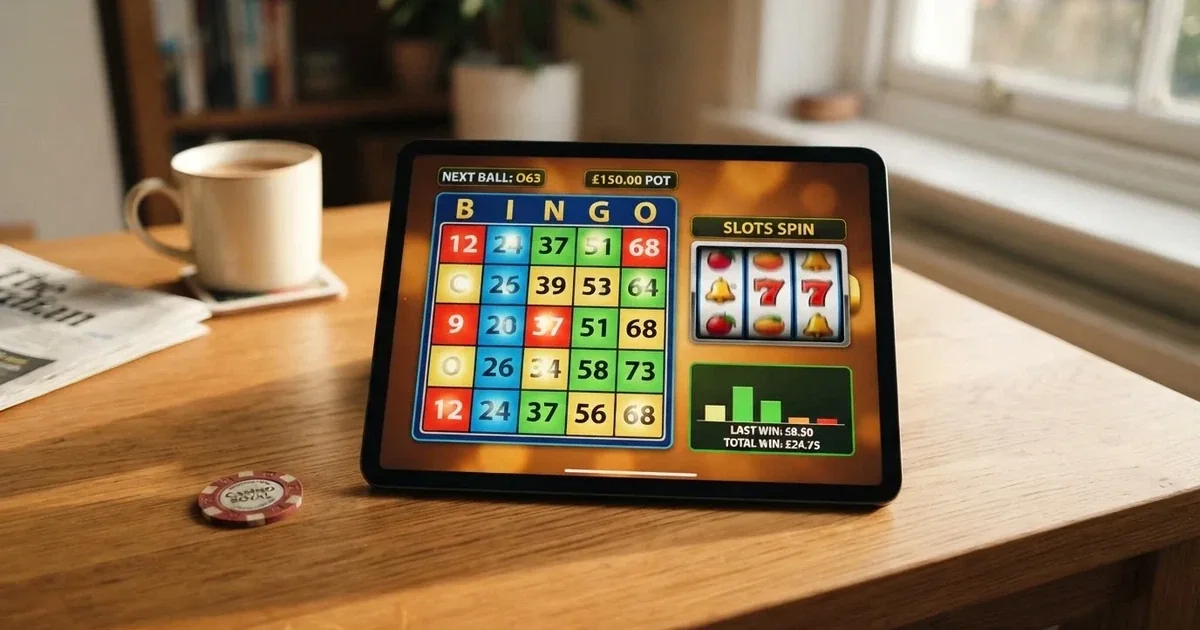
The brand names below all sit on the Gambling Commission’s public register as holders of an active remote casino operating licence, which is the only piece of paper that matters for UK players. Each one is licensed, all of them take part in GAMSTOP, and each one must run its own deposit and identity checks before a first bet. The “no wagering” tag on a bingo-and-slots offer does not let a reader skip those checks, and it does not exempt a reader from the £5 / £2 stake ceiling that has applied to online slots since spring 2025. It changes the bonus terms, and that is all it changes.
23 September 2026 · verified against the Gambling Commission’s public register of gambling businesses and the Commission’s published stake-limit and bonus-cap rules
Table of Contents
- Bingo on a paytable: how 90-ball and its slot neighbours work
- No wagering on a promotion, in plain terms
- The wagering turnover band under the 10x cap
- The ten licensed brands, side by side
- How to read the licence numbers
- The UK legal frame, in summary
- Responsible gaming: GAMSTOP, deposit prompts and the helpline
- Mobile play on the licensed brands
- Bonuses and free spins on the licensed brands
- The mechanics of the slot side: paytable, RTP and variance
- The operators, reviewed
- What a no-wagering offer really costs the player
- What a no-wagering offer does not change
- What to do before claiming
- Frequently asked questions
Bingo on a paytable: how 90-ball and its slot neighbours work
The British version of bingo uses a 90-number pool, a 27-space ticket arranged in three rows and nine columns, and three patterns that pay out: one line, two lines, and a full house. Tickets come in strips of six so every number from 1 to 90 is covered at least once across a strip — a structural choice that guarantees the caller can call every number before the last game in any given session runs dry. The paytable on the operator’s site sets the prize for each pattern, and on most UK-licensed bingo rooms those prizes are split across the number of players who win in the same game. One line might pay £1, two lines might pay £5, a full house might pay £50 or more depending on ticket price and card count.

The slots that share a brand with bingo are different animals. A slot spins a reel set against a fixed RNG; each spin is independent; the RTP sits somewhere between 94% and 97% for most UK-licensed titles; the house edge is the inverse. Aviator, the crash-style game Spribe released in 2019, runs a multiplier that climbs from 1.00x and crashes at a randomly chosen moment — the player must cash out before the crash or lose the stake. That is closer to a trading screen than to a fruit machine, and the variance on it sits well above a typical 96% slot. The licensed UK bingo brands in the table below carry slot libraries that mix RTP brackets from the mid-90s up; a handful of titles disclose a published RTP and volatility, and most do not.
No wagering on a promotion, in plain terms
A wagering requirement is the multiple of a bonus the player must stake before the bonus (and any winnings from it) can be withdrawn. “No wagering” means the bonus, or the winnings from free spins, are paid as cash and can be withdrawn once the minimum deposit and identity checks are cleared. It does not mean the offer is free. A £10 no-wagering bonus on a 96% slot will on average return £9.60 across the spins it funds, and a no-deposit free-spin bundle will on average return less, because the spin count is finite and the stake per spin is finite.
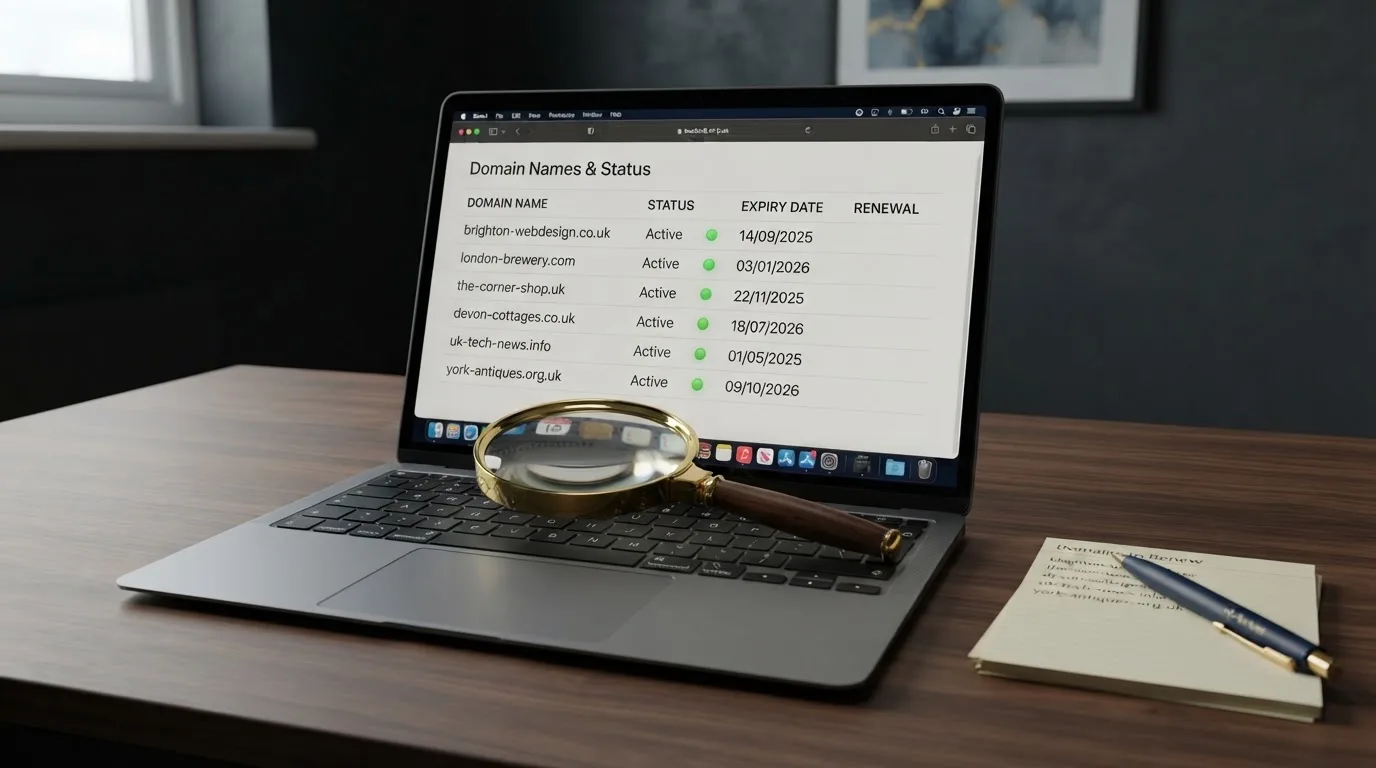
What this does to the comparison between two offers is mechanical. A wagered bonus of £20 at 30x turnover asks the player to stake £600 before withdrawal; a no-wagering bonus of £10 asks for nothing. The £20 bonus sounds larger and is, on its face, twice the value; the £10 bonus removes 600 spins of variance exposure and the chance of busting out before clearance. The honest comparison is between the offered cash amount and the wagering load it carries, and a no-wagering offer is, by construction, lighter on the second term.
Three caveats matter. First, a no-deposit offer still carries a maximum-win cap on most UK-licensed brands — the bonus terms cap the cashout at a stated figure, usually £50 or less. Second, a no-wagering bonus paid as bonus credit still requires a first deposit before withdrawal, even though the bonus itself does not require playthrough. Third, the 10x wagering cap that took effect on 19 December 2025 only applies where wagering exists; a no-wagering offer is unaffected by it because there is nothing to cap. The cap is a ceiling on the old-style heavy multiple, not a floor under the no-wagering offer.
The wagering turnover band under the 10x cap
A £100 bonus carries, at the new ceiling, a turnover requirement of £1,000 — ten times the bonus, no more. At a £5 slot stake that is 200 spins; at the £2 stake that applies to 18-24 year olds it is 500 spins. A £50 bonus halves both. A £10 bonus asks for £100 of turnover, which is 20 spins at £5 and 50 spins at £2. The band for a mid-market welcome package at the cap, in spins, runs from a few dozen to several hundred — never the four-figure spin counts that older 40x or 60x multiples could demand.
That is the visible effect of the cap: it pulls the upper end of the band down by a factor of four to six on the heaviest offers, and it leaves the lower end largely untouched. A reader weighing a no-wagering offer against a capped bonus is no longer comparing a free pass against an impossible grind; the comparison is between two numbers in the same order of magnitude. Where the no-wagering tag wins is not in the spin count but in the absence of variance exposure between the bonus and the withdrawal — the cashout is one step, not a 200-spin lottery.
The figure above is a statistical estimate, not a guarantee. The slots a player actually uses will not return exactly the published RTP over a finite spin set, and a 200-spin sample sits well inside the variance range of a 96% RTP game. Anyone reading this band as “you will lose £4 on a £100 bonus at £5 stakes” is reading a long-run average into a short-run session, which is the one thing the math does not support.
The ten licensed brands, side by side
The comparison table below covers the ten UK-licensed brands that surface in bingo-and-slots searches. Every entry sits on the Gambling Commission’s public register; every entry holds an active remote casino operating licence; every entry is required to take part in GAMSTOP. The “subject support” column tracks how each brand markets a no-wagering promotion in this category — research carries no figure for it, so the column stays empty for now and the brand is judged on its other fields.
| Brand | Licence holder and GB remote casino licence | Domain status on the register | Subject support |
|---|---|---|---|
| Paddy Power | PPB Games Limited · 039411-R-319335-010 | Active | — |
| kwiff | Eaton Gate Gaming Limited · 044448-R-323408-017 | Active | — |
| Betway | Betway Limited · 039372-R-319367-029 | Active | — |
| bet365 | Hillside (UK Gaming) ENC · 055149-R-331499-004 | Active | — |
| Unibet | Platinum Gaming Limited · 045322-R-324275-019 | Active | — |
| 888casino | 888 UK Limited · 039028-R-319297-014 | Active | — |
| Virgin Games | Gamesys Operations Limited · 038905-R-319430-022 | White Label | — |
| Midnite | Dribble Media Limited · 042647-R-321653-022 | Active | — |
| Betfred | Petfre (Gibraltar) Limited · 039544-R-319290-010 | Active | — |
| BetVictor | BV Gaming Limited · 039576-R-319370-028 | Active | — |
A white-label domain, like Virgin Games, trades under another company’s licence — the licence holder is Gamesys Operations Limited, and the brand is a separately marketed skin of the same platform. From a player-protection standpoint the white-label status changes nothing: the licence, the GAMSTOP integration, the financial vulnerability checks and the ADR route all sit with Gamesys Operations. From a brand-recognition standpoint it explains why a domain might look independent of the company that actually runs it.
How to read the licence numbers
A remote casino operating licence number on the Gambling Commission’s register has the shape (account)-R-(number)-(suffix) — for example, 039411-R-319335-010. The leading six digits repeat the licence holder’s account number, the letter R marks a remote (online) licence, and the trailing suffix tracks the individual licence issued under that account. The full string is what the Commission’s public register returns for a domain search, and it is what a reader should expect to see quoted on any operator’s own “about” or “licence” page. A licence number that does not match the Commission’s record is a licence number the player should query.
The UK legal frame, in summary
Online casino in Great Britain is licensable under the Gambling Act 2005, with the Gambling Commission as the regulator. Since the Gambling (Licensing and Advertising) Act 2014, any operator taking customers in Great Britain needs a Commission licence wherever it is based — a Curaçao or Malta registration is not a substitute for UKGC cover. Minimum age 18; name, address and date of birth are verified before the first deposit or any play, and that verification has been mandatory since 7 May 2019. Anonymous play is not available at a licensed site, and the player who reaches for it reaches for an unlicensed one.
The Commission’s published register is the only test of whether a brand is licensed. The register is downloadable in CSV and Excel formats, searchable online by domain or licence holder, and refreshed on a continuous basis. As of the snapshot taken for this page, 139 businesses hold an active remote casino operating licence and the domain list carries 1,065 active entries and 361 white-label entries. That is a deep pool of licensed brands, and the ten above are a sample of it, not the whole of it.
Stake limits, deposit prompts and the slot rules that apply to no-wagering offers alike
Online slots carry a maximum stake per game cycle — £5 for players aged 25 and over since 9 April 2025, £2 for 18-24 year olds since 21 May 2025. The £2 limit reflects the Commission’s reading of the under-25 age group as the highest problem-gambling-score cohort in the population, sitting alongside lower disposable income and ongoing neurological development. A no-wagering bonus played on a slot is played under those stake limits; the bonus tag does not move the stake ceiling.
There is no state-set deposit or loss ceiling. Operators must prompt the customer to set a financial limit before the first deposit — that requirement took effect on 31 October 2025 — but the limit itself is chosen by the player. Reverse withdrawals were banned on 31 October 2021: a player who has asked for a payout cannot un-ask for it and re-gamble the funds. Auto-play has been banned for online slots, spin speeds cannot run faster than 2.5 seconds, and losses disguised as wins have been banned as a presentation. The whole package is built around the slot, not the bingo ticket, but the slot sits on the same platform as the bingo room at every brand in this comparison.
Bonuses since 19 December 2025
Wagering requirements are capped at 10x and mixed-product bonuses (a sports bet that unlocks casino spins, or a casino deposit that unlocks a free sports bet) are banned. The cap is on the multiple, not on the bonus amount, so a £1,000 bonus still carries a 10x turnover ceiling rather than the older 30x or 60x. No-wagering offers sit outside the cap by construction. The Commission has not yet named a minimum bonus amount or a maximum free-spin count, so a no-wagering offer is bounded by the operator’s own marketing budget, the slot library available, and the usual identity and deposit infrastructure.
Payments and what is paid for
Credit cards have been banned for gambling since 14 April 2020, including credit-card-funded e-wallet top-ups. The list of payment methods at any of the ten brands in the table above runs from debit cards and bank transfer to e-wallets, with some accepting PayPal and a smaller set accepting Apple Pay or Google Pay. Withdrawal times vary by method: an e-wallet withdrawal typically completes inside 24 hours once the brand’s internal processing window has passed; a debit card withdrawal can take one to three working days; a bank transfer sits in the same order of magnitude, with weekend and bank-holiday delays on top.
Responsible gaming: GAMSTOP, deposit prompts and the helpline
GAMSTOP is the national online self-exclusion scheme, and a mandatory condition of every online Gambling Commission licence since 31 March 2020. A player who registers with GAMSTOP chooses a six-month, one-year or five-year exclusion period, and the registration cannot be cancelled early. Every brand in this comparison is required to check GAMSTOP before opening an account and to refuse registration if a match is found. The exclusion covers all online gambling with UK-licensed operators, not just the brand on which the player first registered, and the period runs from the registration date, not from the last gambling session.
The Commission’s financial vulnerability check kicks in at £150 of net deposits in a rolling 30-day window, using publicly available data only — the wider financial risk assessments the Commission has signalled are not yet in force as of the snapshot this page is built against. The check is a soft intervention: it does not block deposits, and it does not require the player to do anything, but it does prompt the operator to offer a GAMSTOP registration, a deposit reduction or a cooling-off period. The £150 threshold was set in February 2025.
The National Gambling Helpline (run by GamCare) and the GambleAware signposting service are the two routes for a player who wants to talk to someone. Both are free, both are confidential, and neither requires the player to have self-excluded first. A reader who has reached the point of asking is at the point of calling.
Mobile play on the licensed brands
The ten brands in the comparison all run mobile sites that work in a phone or tablet browser, and a subset of them run native apps in the iOS and Android stores. A browser session is the lowest common denominator — it does not need an install, it does not need storage space, and it does not need a permission grant for push notifications that the player does not yet trust. A native app is faster on cold start, holds a session token that survives a phone restart, and pushes jackpot alerts and reality checks without the browser having to be open. Either route runs the same RNG, the same RTP and the same stake limits, because the rules that apply to a slot apply to the slot regardless of how the player reaches it.
Reality checks — the pop-up that asks whether the player wants to keep playing — are required at intervals the operator sets inside the Commission’s published minimums. A spin speed floor of 2.5 seconds applies to every slot, on every device, on every licence. The £5 / £2 stake ceiling applies to every game cycle regardless of the screen it is played on. The mobile experience is the desktop experience under a smaller window and a touch interface, and it does not soften any of the safer-by-design rules.
Bingo rooms on a phone screen
A 90-ball bingo room runs on a ticket grid, a number strip and a chat box, and the three of them want to live on screen at the same time. On a phone in portrait, that is tight: the ticket grid takes the bottom half, the number strip sits along the top, and the chat shrinks to a single line of text per message. Landscape buys room at the cost of one-handed play, and most rooms accommodate both. The spin speed on a slot neighbour is irrelevant to the bingo call cadence; a 90-ball game runs as long as it takes to call 90 numbers, and most rooms settle inside four to six minutes for a one-line game and eight to ten for a full house.
Bonuses and free spins on the licensed brands
A no-wagering bonus on a UK-licensed brand takes one of three forms. A cash bonus paid straight into the withdrawable balance with no playthrough. A free-spin bundle whose winnings are paid as cash, again with no playthrough, and typically with a maximum-win cap. A “no deposit” free-spin or bonus bundle that asks for nothing from the player except the verified identity check, the GAMSTOP check, and the first-deposit prompt. Each form is bounded differently, and each form costs the player differently.
A cash bonus is the cleanest of the three. The bonus is in the player’s balance, the bonus can be withdrawn, the bonus is not in dispute. The catch, where there is one, is the bonus amount: a £5 cash bonus on a 96% RTP slot returns, on average, £4.80 across the spins it funds, which is a real cost to the operator and a real ceiling on what the player walks away with. A no-wagering £100 cash bonus is a generous offer because the operator is absorbing the £4 of long-run expectation per £100 of stake, not because the player has been handed a free £100.
A free-spin bundle is the second form. The bundle names a slot, a spin count, a stake per spin (which the operator sets inside the £5 / £2 ceiling) and a maximum cashout cap. The cap matters: a 50-spin bundle at 10p per spin on a 96% slot has a long-run expected return of £4.80 and a maximum cashout that the operator will print in the bonus terms, often £50 or less. If the spins return more than the cap, the overage is forfeit; if they return less, the player walks away with what was won. The cap is the price the player pays for the no-wagering tag.
A no-deposit bundle is the third, and the one that needs the most careful reading. The bundle asks for no deposit but still requires a verified account, and almost every UK-licensed brand runs the same maximum-cashout rule on it as on a free-spin bundle — typically £50 or less. The player’s edge case is winning more than the cap: the overage goes back to the operator, and the player walks away with the cap. The brand’s edge case is paying nothing out at all because the spins returned nothing, which happens often enough at small spin counts to make the offer viable.
The mechanics of the slot side: paytable, RTP and variance
A slot’s paytable is the table that maps symbol combinations to cash returns for a given stake. The return-to-player percentage is the long-run average of those returns across all combinations, weighted by their likelihood, and it sits between 94% and 97% for most UK-licensed titles. The 96% figure that recurs in slot marketing copy is an industry midpoint, not a per-game guarantee, and it is published by the operator in the game’s information panel or in the help screen of the slot itself.
Variance, or volatility, is the spread around the RTP. A low-volatility slot returns small wins often; a high-volatility slot returns large wins rarely. Aviator, the crash-style game, sits at the high end of that scale because the multiplier can crash at any moment between 1.00x and the cashout threshold the player set, and the long-tail outcome dominates the average. A 200-spin session on a 96% low-volatility slot and a 200-spin session on a crash game of equivalent stake are two different financial experiences: the first runs close to its expected loss; the second can run a long way above or below it.
The £5 stake ceiling applies per game cycle, and a “game cycle” on a slot is one spin from stake placed to result displayed. A 200-spin session at £5 per spin is £1,000 of stake. The £2 ceiling for 18-24 year olds is the same cycle measured against a smaller number, and the spin count required to stake the same £1,000 doubles to 500.
The operators, reviewed
Paddy Power — large platform, white-label-adjacent licence footprint
Paddy Power’s bingo rooms sit inside a sportsbook-led platform, with a slot library that mixes proprietary titles and the standard UK-licensed providers. The licence is held by PPB Games Limited (account 39411). A no-wagering promotion here is typically a small-stake offer tied to a specific slot or room, reflecting the platform’s focus on sportsbook-wide marketing. This brand suits players who want both bingo and sports betting in one wallet and accept modest bonus values.
kwiff — smaller platform, sharp on crash content
kwiff runs on a smaller platform footprint than the majors in this comparison and surfaces a no-wagering angle as part of its wider promotional push. The licence holder is Eaton Gate Gaming Limited (account 44448). A smaller platform can absorb such promotions more cheaply because its slot library is narrower. This is a solid choice for players who prefer a focused product set and are comfortable with a smaller, independent platform’s library.
Betway — large platform, established slot library
Betway’s bingo and slot footprint sits on a multi-vertical platform with a long UK-licensed history. The licence holder is Betway Limited (account 39372). Promotions here are often free-spin bundles with a stated maximum cashout, as the variance cost is capped via these terms. This operator is recommended for players seeking a well-known name with deep slot library options.
bet365 — large platform, product-led
bet365’s bingo and slot operation sits inside a product-led platform that historically uses gameplay-milestone bonuses rather than flat cash. The licence holder is Hillside (UK Gaming) ENC (account 55149). You are more likely to see “spin to win” mechanics here. This platform is a strong candidate for those who value product depth over large promotional headlines.
Unibet — multi-vertical platform, white-label-style footprint under Platinum Gaming
Unibet sits on a multi-vertical platform under Platinum Gaming Limited (account 45322). Its marketing pushes the no-wagering tag on bingo and slots while the sportsbook maintains a separate schedule. This is a practical selection for players who like to keep their gambling across poker, sports, and casino in one account.
888casino — casino-led, slots depth
888casino is a casino-led brand in the 888 family, offering a deeper slot library than most multi-vertical rivals. The licence is held by 888 UK Limited (account 39028). Bonuses often come as free-spin bundles, which align well with the casino-first approach. This brand is a top pick for those prioritising slot variety.
Virgin Games — bingo-led, white-label under Gamesys
Virgin Games is the bingo-led brand in this comparison, running on the Gamesys Operations Limited licence as a white-label domain. The licence holder is Gamesys Operations Limited, and the domain status is white-label, which means the brand trades under the licence of another company rather than holding its own. A no-wagering promotion on a bingo-led brand is, by industry convention, the cleanest fit: bingo rooms run on a fixed ticket price and a fixed prize structure, and the no-wagering tag attaches to the prize rather than to a bonus balance. The brand is a fit for a player whose primary product is bingo and who wants the slot library as a side bet.
Midnite — newer platform, narrow product set
Midnite is a newer platform with a narrower slot and bingo footprint. The licence is held by Dribble Media Limited (account 42647). They use no-wagering offers as acquisition tools. This is a good choice for players who want a fresh interface and are less concerned with brand history.
Betfred — large platform, sportsbook-led with a slot side
Betfred operates alongside a sportsbook-led platform with many familiar providers. The licence holder is Petfre (Gibraltar) Limited (account 39544). Bonuses are typically modest free-spin bundles rather than large cash sums. This is an appropriate destination for players wanting both sports and bingo in one place.
BetVictor — multi-vertical platform, BV Gaming licence
BetVictor sits on a multi-vertical platform under BV Gaming Limited, with a slot library and a bingo room that have grown over the past few years. The licence holder is BV Gaming Limited, and the brand sits as an active domain. A no-wagering promotion on a brand of this scale tends to mirror the multi-vertical competitors, with free-spin bundles and modest cash bonuses tied to specific slots or specific bingo rooms. The brand is a fit for a player who wants an established UK-licensed name with a balanced product set.
What a no-wagering offer really costs the player
A no-wagering offer costs the player exactly what a regular session costs, plus or minus the bonus amount. A £10 no-wagering cash bonus on a 96% slot returns £9.60 across the spins it funds, and the player is £0.40 worse off than they would have been without the bonus — a real cost, paid in variance rather than in turnover. A no-deposit free-spin bundle at 10p per spin for 50 spins on the same 96% slot has an expected return of £4.80 and a maximum cashout cap that the operator prints in the bonus terms, often £50 or less. If the player wins £60 on those spins, they walk away with £50; if they win £4, they walk away with £4; if they win nothing, the bundle cost them nothing.
The wagering-free tag is a saving on the variance load, not a saving on the house edge. The house edge is unchanged by the bonus structure; what changes is who carries the variance between the bonus claim and the withdrawal. A 30x wagering requirement at £20 of bonus asks the player to stake £600 before withdrawal, and that £600 of stake carries an expected loss of £24 at 96% RTP. A no-wagering £20 cash bonus carries an expected loss of £0.80 at the same RTP. The saving is the difference between £24 and £0.80, and that is the honest comparison.
The 10x cap that took effect on 19 December 2025 reduces the worst-case wagering load by a factor of three or more, but it does not eliminate it. A £100 bonus at the cap asks for £1,000 of turnover, and £1,000 of turnover at 96% RTP carries an expected loss of £40. The cap brings the worst-case closer to the no-wagering best-case, which is the structural change the Commission was after.
What a no-wagering offer does not change
The verification checks do not move. Name, address and date of birth are verified before the first deposit or any play, and that verification has been mandatory since 7 May 2019. The GAMSTOP check does not move. The deposit-limit prompt does not move. The £5 / £2 stake ceiling does not move. The spin-speed floor of 2.5 seconds does not move. The reverse-withdrawal ban does not move. The auto-play ban does not move. The reality-check prompt does not move. The no-wagering tag is a bonus term, not a player-protection exemption, and the player who reads it as one will be surprised by the first deposit prompt and the first GAMSTOP check.
What to do before claiming
Read the bonus terms for the maximum cashout cap. A no-wagering free-spin bundle with a £50 cap is worth less than the headline spin count if the cap sits below the long-run expected return of the bundle. Read the eligible games list. A no-wagering bonus tied to a slot the player would not otherwise play is worth its face value in marketing and less in cash. Read the minimum deposit requirement. A no-deposit bundle still requires a verified account and may require a first deposit before the cashout clears. Read the expiry. A free-spin bundle typically expires in 24 to 72 hours, and a cash bonus typically expires in 7 to 30 days. None of these are tricks; they are the published terms of a UK-licensed offer, and the player who reads them is the player who knows what they have agreed to.
Frequently asked questions
What does a no-wagering bonus on a bingo site actually mean?
A no-wagering bonus is paid as cash, not as bonus credit, so it can be withdrawn as soon as the minimum deposit and identity checks are cleared. It does not remove the house edge on the slot or the bingo room, and it does not exempt the player from the stake limits, deposit prompts or GAMSTOP check that apply to any UK-licensed offer.
Which slots on a bingo site tend to pay out best?
Slots on UK-licensed brands publish RTPs between roughly 94% and 97%, with 96% as an industry midpoint. A handful of titles disclose a published volatility rating; most do not. The slot with the highest published RTP is not necessarily the slot that returns the most cash in a 200-spin session, because variance dominates the short-run outcome.
Is a no-deposit bingo offer still subject to a maximum win cap?
Yes. Most UK-licensed brands cap the cashout from a no-deposit free-spin or bonus bundle at a stated figure, typically £50 or less. The cap is printed in the bonus terms, and any winnings above the cap are forfeit on withdrawal.
How well does mobile bingo and slots play perform on a phone browser?
A browser session on a phone or tablet works without an install and without a permission grant, and it runs the same RNG, RTP and stake limits as a desktop session. A native app is faster on cold start and pushes reality-check alerts without the browser being open, but the underlying game is identical.
Are bingo and slots offered on the same licence at a UK site?
Yes, where the operator holds a remote casino operating licence that covers both. The Gambling Commission’s register lists each domain against the licence account that runs it, and a brand offering both bingo and slots sits under the same licence number for both products.
Must a bingo and slots site be Gambling Commission-licensed to offer UK players a no-wagering bonus?
Yes. The Gambling Act 2005 makes it an offence to provide gambling to people in Great Britain without a Commission licence, and a Curaçao or Malta registration is not a substitute. The Commission’s public register is the only test of whether a brand holds a licence, and the player who skips that check skips the only protection they have.
Prepared by the signupbonuscheck editorial staff.