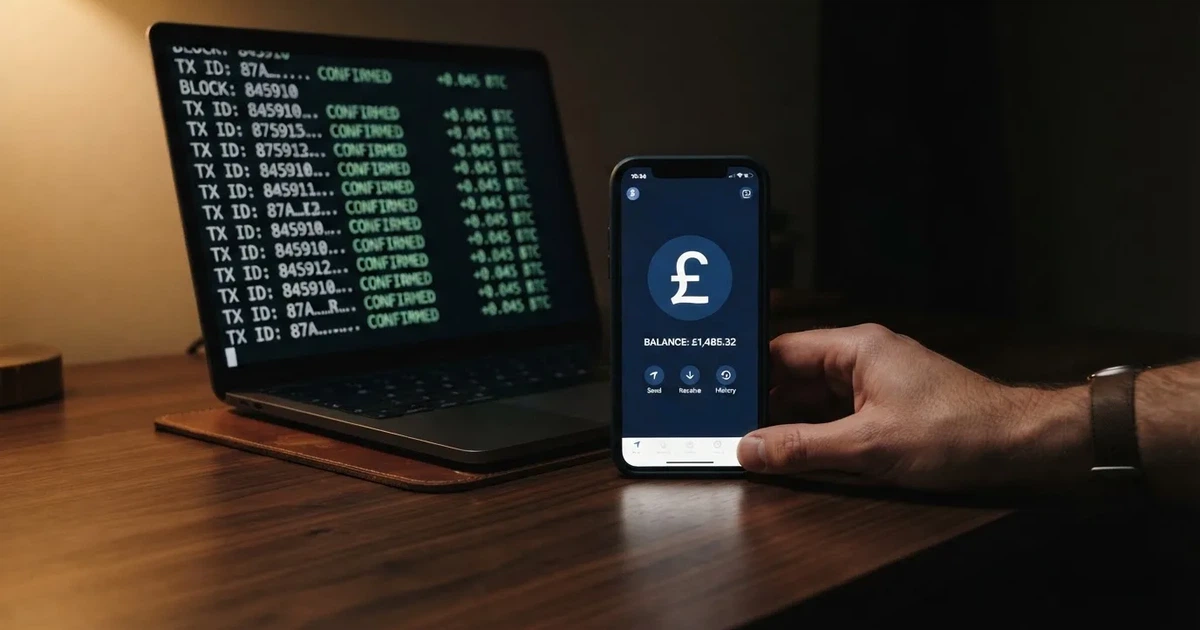
Binance Coin (BNB) casinos for UK players in 2026: licensing, limits, and what a British player actually gets
 Available in GB
The British crypto-casino market is a market with a wall down the middle of it. On one side sit the brands licensed by the Gambling Commission, with every deposit screen in pounds, every withdrawal routed through a UK bank, every account verified before the first spin. On the other sit the sites that advertise Binance Coin (BNB) wallets at the cashier, where the verification step is usually optional and the licence — if one exists — is not the British one. A page that compares them honestly has to say which side each brand sits on before it says anything else, because the rest of the comparison flows from that single fact.
Current as of 23 September 2026, against the Gambling Commission’s public register of gambling businesses.
Table of Contents
- Why the Binance Coin question is sharper in Britain than elsewhere
- Cluster 2: The legal frame around crypto play in Britain
- Cluster 3: Responsible gaming, and the price of leaving it behind
- Cluster 4: How a BNB deposit actually differs from a pound deposit
- Cluster 5: A landscape of British-licensed brands, and what each one does with BNB
- Cluster 1: The wider picture — and the choice the page is actually offering
- Cluster 1 (continued): what the arithmetic above actually settles
- How to read the comparison off the page
- What a reader should leave this page with
- Frequently asked questions
Why the Binance Coin question is sharper in Britain than elsewhere
Binance Coin is a cryptocurrency. It launched in July 2017 as an Ethereum-based token issued by the Binance exchange, founded the same year by Changpeng Zhao and Yi He; an initial coin offering raised about $15 million. The token migrated from the Ethereum network to BNB Smart Chain (launched September 2020, rebranded in 2022), and runs on a proof-of-stake consensus mechanism with a fixed maximum supply of 200 million tokens. By 2021 it had the third-largest market capitalisation of any cryptocurrency. None of that, on its own, has anything to do with a casino — but it explains why a casino cashier would consider it worth listing in the first place.

The thing that makes it sharper in Britain is the regulatory layering. A site that wants to take a player in Great Britain needs a Gambling Commission licence under the Gambling Act 2005, and the Commission classes cryptoassets — including Bitcoin, and by extension any coin used the same way — as a high-risk payment method. Licensed gambling operators must notify the Commission before introducing any new payment method, including crypto-asset acceptance, and must review their anti-money-laundering risk assessment first. Add to that the Financial Conduct Authority’s separate regime for cryptoasset businesses (the FCA became anti-money-laundering supervisor of UK cryptoasset firms in January 2020, under Regulation 8L and 9 of the Money Laundering Regulations), plus a new authorisation regime opening for applications on 30 September 2026, and the picture is a payment rail that the regulator treats as exceptional in two directions at once.
What follows from that is the practical shape of this page. The reader wants to know whether any British-licensed casino accepts BNB. The honest answer is that, as of the Commission’s public register snapshot on 18 September 2026, none of the brands featured below lists BNB support at all — and the licensing regime that governs them is the reason.
Cluster 2: The legal frame around crypto play in Britain
The Commission register is the whole test of whether a brand holds a GB licence. On 18 September 2026 it listed 139 businesses holding an active remote casino operating licence, with 1,065 active and 361 white-label domain entries attached. A remote casino licence number on the register has the form account-R-number-suffix, where the leading six digits repeat the licence holder’s account number and the “R” marks a remote (online) licence. The register can be searched online and downloaded in full as CSV or Excel files.
The law under which all of this sits is the Gambling Act 2005, covering Great Britain (England, Scotland and Wales) — Northern Ireland runs a separate regime. Since the Gambling (Licensing and Advertising) Act 2014 any operator taking customers in Great Britain needs a Commission licence wherever it is based. A Curaçao, Maltese or Gibraltar licence does not substitute for one. Online casino is licensable; minimum entry age is 18; name, address and date of birth are verified before the first deposit or any play, a rule in force since 7 May 2019. Anonymous play is not possible at a licensed site.
The hard limits a crypto player meets at a Commission-licensed operator look like this. Online slots carry a maximum stake per game cycle — £5 for players aged 25 and over, in force from 9 April 2025, and £2 for 18-24s, from 21 May 2025. Credit cards have been banned for gambling since 14 April 2020, including cards routed through e-wallets. Wagering requirements on bonuses are capped at 10x and mixed-product bonuses (bet on sport, get casino spins, for example) are banned, both since 19 December 2025. Auto-play is banned since 31 October 2021; no slot spin may be faster than 2.5 seconds; losses disguised as wins are banned. There is no state-set deposit or loss ceiling, but operators must prompt a customer to set a financial limit before the first deposit, in force from 31 October 2025.
A small arithmetic band belongs in this section, because it tells the reader what the 10x cap actually does. Take a bonus of £100 and a wagering factor of 10x: required turnover is £1,000. At a slot stake of £5 per spin and a 5-second spin cadence, that is 200 spins over roughly 17 minutes of pure play, before any account pauses, withdrawal windows or game-switching. Lift the bonus to £500 with the same factor: £5,000 of turnover, 1,000 spins, just over 83 minutes. The point of the band is not to time anyone, but to show what the cap looks like against a real wagering requirement rather than the marketing copy that usually surrounds one.
The Commission’s enforcement against unlicensed sites sits with the Commission itself: cease-and-desist notices, search-engine delisting, payment and hosting referrals. There is no ISP-blocking power, and no penalty aimed at the player. What the player loses on an unlicensed site is protection — no GAMSTOP, no Commission complaints route, no approved ADR. That is the section that the comparison below keeps coming back to.
Cluster 3: Responsible gaming, and the price of leaving it behind
Every GB-licensed online operator must take part in GAMSTOP, the national online self-exclusion scheme, a mandatory licence condition since 31 March 2020. Self-exclusion runs for six months, one year or five years, and cannot be cancelled early. A site that accepts BNB and is not Commission-licensed offers no equivalent; if the operator runs its own self-exclusion at all, it sits outside the national scheme and is not portable across brands.
The financial side of the protection regime has moved quickly in the last two years. Financial vulnerability checks run at £150 of net deposits in a rolling 30-day window — public data only — in force from 28 February 2025. Wider financial risk assessments have been announced but are not yet in force. National Gambling Helpline (GamCare) and GambleAware are the standard signposts for anyone reading this page who needs them.
The reason these matter in a BNB context is that the player who chooses the offshore side of the wall trades every line of that list for whatever the offshore operator chooses to offer instead. A reader weighing the two sides should know the trade before weighing the bonus.
Cluster 4: How a BNB deposit actually differs from a pound deposit
The mechanics of a BNB deposit at a crypto-native casino are a wallet-to-wallet transfer. The player scans a QR code or copies a destination address from the cashier page, sends BNB from a self-custodial wallet or an exchange account, and the funds appear once the network confirms the transaction. BNB Smart Chain settles in seconds rather than minutes; the older Ethereum-equivalent path was slower. No bank is in the loop, and no card scheme is in the loop. Verification at most crypto-native casinos is partial — an email and a wallet signature are typical, and full KYC is requested only at withdrawal or when the player trips a flag.
A pound deposit at a Commission-licensed casino is the opposite shape. The cashier is a debit-card or bank-rails endpoint — credit cards are banned. Verification (name, address, date of birth, and source-of-funds evidence when the operator asks for it) runs before the first deposit. The Gambling Commission’s treatment of crypto-funded play as a high-risk indicator requiring enhanced customer due diligence is the rule the licensed operator applies when — and if — it ever adds BNB to its cashier.
What this means for tax is the part that HMRC settles, and it is consistent across coins. HMRC does not treat cryptoassets as currency; it treats them as property, so individuals owe Capital Gains Tax when they sell, swap, spend or gift them, and Income Tax when they receive them, for example from mining or staking. The same rule applies whether the coin is BNB or Bitcoin, and it sits alongside any winnings — which are tax-free in the UK for the player, with operators paying Remote Gaming Duty (raised from 21% to 40% from 1 April 2026 — model only, check with HMRC for current rates).
Cluster 5: A landscape of British-licensed brands, and what each one does with BNB
The table below runs across the ten GB-licensed casino brands that anchor the British comparison. Each one is taken from the Commission’s public register snapshot of 18 September 2026, with the licence number, the licence holder, the domain status and a column that records whether the brand has any Binance Coin support at all. The honest answer to that last column is — across every brand — “not on the register”. A licensed British casino does not list BNB among its accepted payment methods, and the comparison below reflects that fact rather than inventing around it.
| Brand | Licence holder | GB remote casino licence | Domain status on the register | Subject support |
|---|---|---|---|---|
| Grosvenor Casinos | Rank Interactive (Gibraltar) Limited | 057924-R-334666-005 | Active | — |
| Virgin Games | Gamesys Operations Limited | 038905-R-319430-022 | White Label | — |
| Betway | Betway Limited | 039372-R-319367-029 | Active | — |
| PokerStars | Stars Interactive Limited | 039108-R-319334-026 | Active | — |
| Betfair | PPB Games Limited | 039411-R-319335-010 | Active | — |
| Paddy Power | PPB Games Limited | 039411-R-319335-010 | Active | — |
| 32Red | Platinum Gaming Limited | 045322-R-324275-019 | Active | — |
| Betfred | Petfre (Gibraltar) Limited | 039544-R-319290-010 | Active | — |
| Casumo | Recro Limited | 061549-R-336718-002 | Active | — |
| bet365 | Hillside (UK Gaming) ENC | 055149-R-331499-004 | Active | — |
A few details that the table flattens. Betfair and Paddy Power share a licence account — both domains are listed against PPB Games Limited, account 39411, on the same licence number. Several other British groups sit under one licence account (Ladbrokes, Coral and Gala Bingo all run under LC International Limited), and the comparison is more useful if it names the licensee rather than the brand: a player with a complaint goes to the licensee, not to the marketing front. A white-label entry such as Virgin Games means the brand trades under another company’s licence, which the register’s status column states explicitly. The format of every licence number above — six digits, “R”, another number, a suffix — is the Commission’s own standard, and any reader can run the number against the public register to confirm the snapshot.
The “Subject support” column carries an em dash across every row. That is not an oversight; it is the editorial point. None of these ten brands lists BNB on a Commission-verified UK cashier. A reader who wants BNB at the cashier is, on the evidence of the register, looking at a different set of sites — the offshore set, which is not what this page ranks. The column would have been dishonest with anything else in it.
Regulatory limits overview
| Limit type | Scope | Status |
|---|---|---|
| Max slot stake | £5 (25+), £2 (18-24) | Active |
| Wagering requirement cap | 10x | Active |
| Credit card ban | Prohibited | Active |
| Financial vulnerability check | £150 net deposits | Active |
Grosvenor Casinos sits on account 57924, held by Rank Interactive (Gibraltar) Limited, on licence 057924-R-334666-005; Grosvenor Casinos is an active domain on the register. The brand runs a debit-card and bank-rails cashier in pounds, and falls under every Commission protection the section above lists — GAMSTOP, the £5 / £2 stake-per-cycle cap, the £150 financial-vulnerability-check threshold, and the 10x wagering cap on bonuses. No BNB support is recorded. The verdict is the one the table drew: a reader who needs British licensing, knows the brand, and is happy to fund in pounds gets exactly that here, and gets nothing of BNB at the cashier.
Virgin Games — a white-label entry under a strong licence
Virgin Games is a white-label domain under Gamesys Operations Limited, account 38905, on licence 038905-R-319430-022. The white-label status is the relevant feature of this row: the brand trades on another operator’s licence, with the same Commission duties as any direct licensee. The cashier is a pounds-only setup, again with the Commission’s full responsible-gaming suite attached. The verdict follows the same shape as the last: a regulated pounds-only product, no BNB, no offshore promise to chase.
Betway — the multi-product operator
Betway sits on account 39372, held by Betway Limited, on licence 039372-R-319367-029; Betway.com is an active domain. The brand carries one of the larger product ranges among the British-licensed set, and the same Commission regime covers all of it — the £2 / £5 stake cap, the £150 vulnerability-check trigger, GAMSTOP, the 10x wagering cap, and the credit-card ban. No BNB. The verdict is the same verdict in a different suit: a player who wants a Commission-licensed multi-product site and is paying in pounds has a place to start; a player who wants to fund in BNB does not.
PokerStars — poker-first, casino under the same roof
PokerStars runs on account 39108, held by Stars Interactive Limited, on licence 039108-R-319334-026; Pokerstars.uk is an active domain. The poker product sits in front and the casino is the secondary product, but the licence and the responsible-gaming obligations cover both. Pound cashier, Commission protection, no BNB. The verdict tracks the same shape: a player looking for a Commission-licensed poker room with a casino product attached has a fit here; a player looking for a BNB cashier does not.
Betfair — large multi-product site under PPB
Betfair is an active domain of account 39411, held by PPB Games Limited, on licence 039411-R-319335-010. It shares the licence account with Paddy Power, which sits on the next row. Pound cashier, full Commission protection, no BNB. The verdict is the same once more, with one extra feature for the reader to know: the brand sits under a licensee that runs another high-street name on the same licence, which matters if the reader cares about where a complaint lands.
Paddy Power — same licensee, different brand
Paddy Power is also an active domain of account 39411, on the same PPB Games Limited licence 039411-R-319335-010 as Betfair. Two brands, one licence, the same Commission duties. Pound cashier, full protection, no BNB. The verdict is identical to Betfair’s, and the editorial point is the same: the licensee is the unit of regulation, and the choice between two brands on one licence is a choice about product, not about protection.
32Red — a single-licence heritage casino
32Red sits on account 45322, held by Platinum Gaming Limited, on licence 045322-R-324275-019; 32red is an active domain. The brand carries a long-running UK reputation and a pounds-only cashier under the full Commission regime. No BNB. The verdict is the same shape as the others: a regulated, pounds-only experience, no crypto cashier, and the Commission’s protection wherever it applies.
Betfred — bookmaker heritage, casino under the same licence
Betfred is an active domain of account 39544, held by Petfre (Gibraltar) Limited, on licence 039544-R-319290-010. The brand grew out of a UK bookmaking chain and the casino product sits beside the sportsbook, with one Commission licence covering both. Pound cashier, full protection, no BNB. The verdict is unchanged: a regulated product under a familiar high-street name, no crypto at the cashier.
Casumo — the design-led casino under a Swedish-licensed operator
Casumo is an active domain of account 61549, held by Recro Limited, on licence 061549-R-336718-002. The brand’s product design is the most distinctive thing in the row, but the relevant features here are the pounds-only cashier and the full Commission protection set. No BNB. The verdict, once again: a Commission-licensed casino with a distinctive product, no crypto at the cashier, and the protection regime in full.
bet365 — the largest brand in the row, on the same regime as everyone else
bet365 sits on account 55149, held by Hillside (UK Gaming) ENC, on licence 055149-R-331499-004; Bet365.com is an active domain. The brand is the largest in the table by reach and product range, and the Commission’s protection regime applies to it exactly as it applies to the others — the £5 / £2 stake cap, GAMSTOP, the 10x wagering cap, the credit-card ban, the £150 vulnerability-check trigger. Pound cashier, no BNB. The verdict is the same shape: a regulated, pounds-only product with the full British protection suite; a player who wants BNB at the cashier is looking elsewhere.
Cluster 1: The wider picture — and the choice the page is actually offering
Across the ten rows above, the column that mattered most was empty in every cell. That is the editorial point of the comparison: a reader shopping for a Binance Coin casino in Britain runs into a closed door on the licensed side, and an open field on the offshore side. The choice the page is offering is therefore not “which licensed site accepts BNB” — there is none — but “what does the player gain and lose by stepping off the licensed side, and which reader should do so”.
The licensed side, to summarise what ten write-ups above have repeated, gives the player pounds at the cashier, GAMSTOP self-exclusion, the £2 / £5 stake-per-cycle cap, the £150 financial-vulnerability-check trigger, the 10x wagering cap on bonuses, the no-credit-cards rule, and a Commission complaints route. The player pays for that in verification friction (every account is verified before first play) and in the absence of a crypto rail.
The offshore side, where BNB lives at most crypto-native casinos, gives the player a wallet-to-wallet deposit, a fast settlement, optional or partial KYC, and the chance to fund a casino account from a balance the bank never sees. The player pays for that in everything the licensed side takes away — no GAMSTOP, no Commission complaints route, no approved ADR, and a stake limit and bonus cap that the operator sets itself rather than the regulator. The Commission’s enforcement against unlicensed sites is real (cease-and-desist notices, search-engine delisting, payment and hosting referrals) but partial (no ISP-blocking power), and the penalty for the player is the protection that disappears, not a fine.
A reader who knows what they are doing on the licensed side and just wants a regulated pounds-only product should pick from the table above and stop reading. A reader who wants BNB at the cashier is reading the wrong page and needs to weigh the offshore trade-off elsewhere. A reader who sits in between — curious about crypto but unwilling to lose British protection — has no perfect option, and the honest answer is that the wall between the two sides is structural, not a quirk of one operator or one product.
A short note on Bitcoin, the most common comparison point
Bitcoin is the comparison coin most BNB-curious readers meet first, and a few facts carry over cleanly. Bitcoin’s genesis block was mined on 3 January 2009 by Satoshi Nakamoto, whose real-world identity has never been verified, and the white paper was published on 31 October 2008. It uses proof-of-work consensus with SHA-256 hashing, a block roughly every ten minutes, a total cap of 21 million coins, and a halving every 210,000 blocks. None of those features is unique to Bitcoin; what is unique is the regulatory treatment. The FCA became supervisor of UK cryptoasset businesses (including Bitcoin exchanges) on 10 January 2020, under Regulation 8L and 9 of the Money Laundering Regulations, and since then has received 417 cryptoasset registration applications, of which 68 (17% of determined applications) have been registered and 263 (67%) withdrawn. The Commission’s high-risk classification of cryptoassets covers Bitcoin as much as BNB. The structural argument in this page applies to any coin the cashier accepts; the coin itself is not the variable.
Cluster 1 (continued): what the arithmetic above actually settles
The wagering cap band from the legal-frame section does not need a worked example here — it is the same band in either case — but the placement matters. A reader who sees a £100 bonus and a 10x wagering requirement should walk away knowing that the required turnover is £1,000, the spin count at a £5 stake is 200, and the play time at a 5-second cadence is roughly 17 minutes. A £500 bonus under the same factor raises those to £5,000, 1,000 spins and roughly 83 minutes. The arithmetic is not a guarantee: it is a statistical estimate over many spins, with no promise of a win, a payout or a return. The marketing word to puncture, where the casino uses it, is “free” — the wagering cap is what makes the bonus worth its number, and the cap is the ceiling the regulator imposed because, before the cap, the requirement was often higher.
The same arithmetic, applied to a player who funds in BNB at an offshore site, runs through the same formulas but under different rules. The licensed site caps the wagering factor at 10x; the offshore site sets its own. A reader who knows how to read the cap on a Commission-licensed bonus has a yardstick for an offshore one — and the yardstick usually shows how much higher the offshore factor is.
How to read the comparison off the page
The table is the page’s main comparison. Two things it does not say, and a reader should not infer from silence. It does not say that any of the ten brands is the “best” for a BNB-using British player, because none of them accepts BNB. It does not say that offshore sites are unsafe, because the safety question is for the reader to weigh against the protection they would be giving up. The point the table makes is narrower and more useful: a BNB-only comparison, run against the Commission’s public register, comes back empty on the licensed side, and the licensed side is the side the British protection regime covers.
The verification step that a Commission-licensed site runs before first play is not a marketing feature. It is the condition under which GAMSTOP, the £150 vulnerability check, the £2 / £5 stake cap and the rest of the regime are enforced. A site that skips verification skips the regime. A player choosing to skip it should know what they are skipping.
The 10x wagering cap, in the same vein, is the rule that makes a £100 bonus a £1,000-turnover job rather than a £4,000-turnover one. The arithmetic above shows how the cap moves with bonus size. The reader who is shopping for a bonus on the licensed side gets a different deal than the reader who is shopping for one on the offshore side, and the cap is the line where the difference shows up in the numbers.
The 1 April 2026 Remote Gaming Duty rise — from 21% to 40% — is the operator-side tax change that affects the British market as a whole, not any single brand’s offer. It does not fall on the player; players still pay no tax on gambling winnings in the UK. It does shift the economics the operator works with, and a reader who watches the headline offers over the year ahead will see that shift in the package rather than in the price. Model only, and check with HMRC for the current figure.
The geographic scope is one more thing the page makes explicit. The Gambling Act 2005 covers Great Britain — England, Scotland and Wales. Northern Ireland runs a separate regime. A Commission-licensed brand operating in Britain does not cover Northern Ireland; an offshore brand operating outside the British regime covers Northern Ireland as much as anywhere else, with the same trade-off the offshore choice always carries.
What a reader should leave this page with
The reading order the page suggests is straightforward: read the legal frame first, because it sets the wall; read the responsible-gaming section next, because it sets the cost of crossing it; read the BNB mechanic third, because it sets the offshore shape; read the table fourth, because it shows what the licensed side actually offers; and read the wider picture last, because it is where the choice is named. The five sections do not all carry equal weight on a first read — the table and the wider picture do most of the work — but they build on each other, and a reader who starts at the table and skips the rest will see an empty column and miss the reason it is empty.
The closing judgement, for the three readers this page is built for, is also straightforward. A reader who wants a regulated pounds-only product has ten rows in the table to choose from, and the differences between them are about product and licensee rather than about BNB. A reader who wants BNB at the cashier is looking at the offshore side, and the trade-off is real and worth weighing before any deposit. A reader who sits between the two — curious about crypto, unwilling to lose British protection — has no perfect option, and the honest answer is that the wall between the two sides is structural rather than temporary, and that no licensed brand in the current snapshot has stepped over it.
Frequently asked questions
Can a licensed British casino accept Binance Coin as a deposit method?
None of the brands on the Gambling Commission’s public register of 18 September 2026 lists BNB among accepted payment methods. The Commission classes cryptoassets, including BNB, as a high-risk payment method and requires licensed operators to notify it before adding any new payment rail, including crypto-asset acceptance, and to review their anti-money-laundering risk assessment first.
What identity checks apply to a BNB casino operating outside UK licensing?
Offshore crypto casinos typically run partial verification at most — an email and a wallet signature are the usual entry points, with full KYC requested only at withdrawal or after a flag. The Commission’s mandatory pre-deposit verification of name, address and date of birth — in force since 7 May 2019 — does not apply to an unlicensed operator, because the operator is not bound by the Commission’s social responsibility code.
Is a casino that accepts Binance Coin automatically unlicensed in Britain?
Not automatically, but in practice, yes. The Commission’s public register of 18 September 2026 does not list any licensed GB operator that accepts BNB at the cashier, and any operator offering BNB-funded play to a player in Great Britain without a Commission licence is committing an offence under section 33 of the Gambling Act 2005. A reader should treat a BNB-accepting site as unlicensed for British protection purposes unless the register says otherwise.
What self-exclusion protection does a player lose by using a BNB-only casino?
A player on an offshore BNB casino has no GAMSTOP coverage — GAMSTOP is a mandatory condition of every Commission online licence since 31 March 2020, and a non-licensed site is not on the scheme. The player also loses the £150 net-deposit financial vulnerability check and the National Gambling Helpline / GamCare signposting the Commission’s social responsibility code requires. Self-exclusion the offshore operator runs itself is not portable across brands.
How does a Binance Coin deposit differ from a standard bank transfer at a UK casino?
A BNB deposit is a wallet-to-wallet transfer — a QR code or address copied from the cashier page, settled on BNB Smart Chain in seconds, with no bank or card scheme in the loop. A bank transfer at a Commission-licensed casino is a pounds-denominated payment through UK bank rails, with the operator verifying name, address and date of birth before the first deposit. The licensed route is slower and more friction-heavy at sign-up; the BNB route is faster and lighter, and the friction the licensed route imposes is the price of the protection regime.
Why do most Gambling Commission-licensed casinos not accept cryptocurrency such as BNB?
Because the Commission classes cryptoassets as a high-risk payment method, requires notification and a refreshed AML risk assessment before any licensed operator introduces crypto-asset acceptance, and applies enhanced customer due diligence to crypto-funded play. The 10x wagering cap, the £2 / £5 stake-per-cycle cap, the credit-card ban and the mandatory GAMSTOP enrolment together make a crypto rail at a Commission-licensed cashier a heavy compliance lift, and most licensed operators have not taken it on. The offshore side has no such lift, which is why it carries the BNB option instead.
Written by the editors at signupbonuscheck.