
UK Online Casinos With a 100% Match Bonus in 2026
A 100% welcome bonus at a UK-licensed casino: how the doubling works, what the rules cost the player, and which ten brands sit on the register
Verified against the Gambling Commission’s public register as of 8 November 2026.
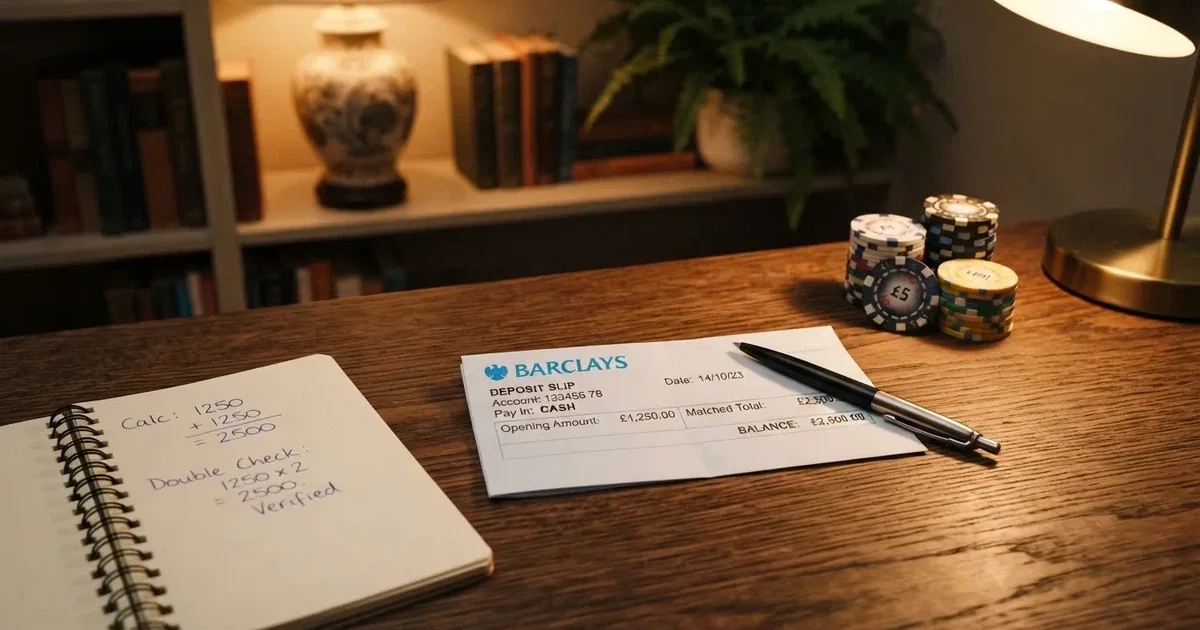
A 100% welcome bonus doubles the first deposit at an online casino, pound for pound, up to a stated cap. At a UK-licensed site that doubling now sits inside rules tighter than almost any other regulated market: a wagering cap of ten times the bonus since 19 December 2025, mandatory identity checks before the first deposit, a stake ceiling that changes with the player’s age, and a national self-exclusion register that no operator can opt out of. The doubling still happens. The terms it arrives inside have moved.
That gap, between the marketing promise and the regulated reality, is what this page is about. It explains what a 100% match really costs once the wagering rule is applied, walks through the rules that decide what shape a UK bonus can take, and lays out ten brands currently on the Gambling Commission’s public register that a player comparing a 100% welcome offer will encounter in 2026.
Table of Contents
- How a 100% bonus incentive actually works
- The fundamentals: UK rules that shape every 100% bonus
- Responsible play inside a 100% bonus
- Funding the deposit: cards, wallets, and paysafecard
- Reading the small print: wagering, time, and the cost of a 100% match
- Operator landscape: jurisdiction, licence, and ten UK-licensed brands
- Questions readers ask about a 100% casino bonus
- Frequently asked questions
How a 100% bonus incentive actually works
A 100% match is the simplest welcome structure in online gambling. Deposit £X, the casino adds another £X, and the player’s balance becomes £2X up to a cap named in the offer. Read literally, the bonus is free money that doubles the bankroll. Read against what the player actually has to do to withdraw any of it, the doubling is closer to a credit that has to be earned back.
The mechanics sit in three parts. First, the deposit. The player funds an account with a payment method the operator accepts. The minimum to trigger the offer is set by the operator, and the offer is usually limited to the first deposit only, with a window — often seven to thirty days — inside which the new account has to be opened and the deposit made. Second, the credit. The operator matches the qualifying deposit up to a cap, so a “100% up to £100” offer turns a £100 deposit into a £200 playable balance and a £50 deposit into a £150 one, while a £200 deposit on the same offer caps at £200 bonus and £400 balance. Third, the conditions. Wagering requirements, time limits, game weighting, maximum stake rules and the rest, which decide how — and whether — any of that doubled balance ever turns into withdrawable cash.
The “match” wording is the operator’s. The arithmetic is the player’s. A matched bonus is not a gift. It is a sum of bonus funds that the operator has agreed to credit if the player wagers it through a specified number of times first. Under UK rules that number is capped. From 19 December 2025 the Gambling Commission set the wagering requirement on casino bonuses at ten times the bonus amount. A £100 bonus therefore carries £1,000 of required turnover before any of the bonus balance can be withdrawn; a £200 bonus carries £2,000. The cap does not mean every offer uses it, only that none can go above it. Some operators run lower; most run at the cap. The ceiling is fixed, and the floor — usually 30x or 40x at offshore sites — is gone for British players.
The 100% structure has a long history in online gambling, and three of its variations still turn up at UK-licensed brands. The most common is the pure deposit match, where the offer is “100% up to £X” on a single first deposit. A second is the spread match, where the offer is split across the first two or three deposits — 100% on the first up to £100, 50% on the second up to £200, and so on — which lets the operator advertise a larger headline cap while paying out less per deposit. A third, more recent, is the hybrid, which adds free spins on a featured slot to a smaller 100% match. The headline still says “100% bonus”, but the real value is split between the cash match and a fixed spin allocation on a named game.
Crypto-funded welcome bonuses sit in a separate corner of the market. In the UK that corner is narrow. The Gambling Commission does not bar operators from accepting crypto, but it requires that any operator taking British players holds a remote operating licence, and the practical effect is that the crypto-first brands most UK players encounter offshore are not on the Commission’s register. A “100% welcome bonus paid in Bitcoin” at a Curaçao-licensed operator is a real product, just not one the UK rules apply to. The 10x cap does not apply there, neither does GAMSTOP, and a complaint has no British route. The licensed set covered later in this page is the one the rules do apply to.
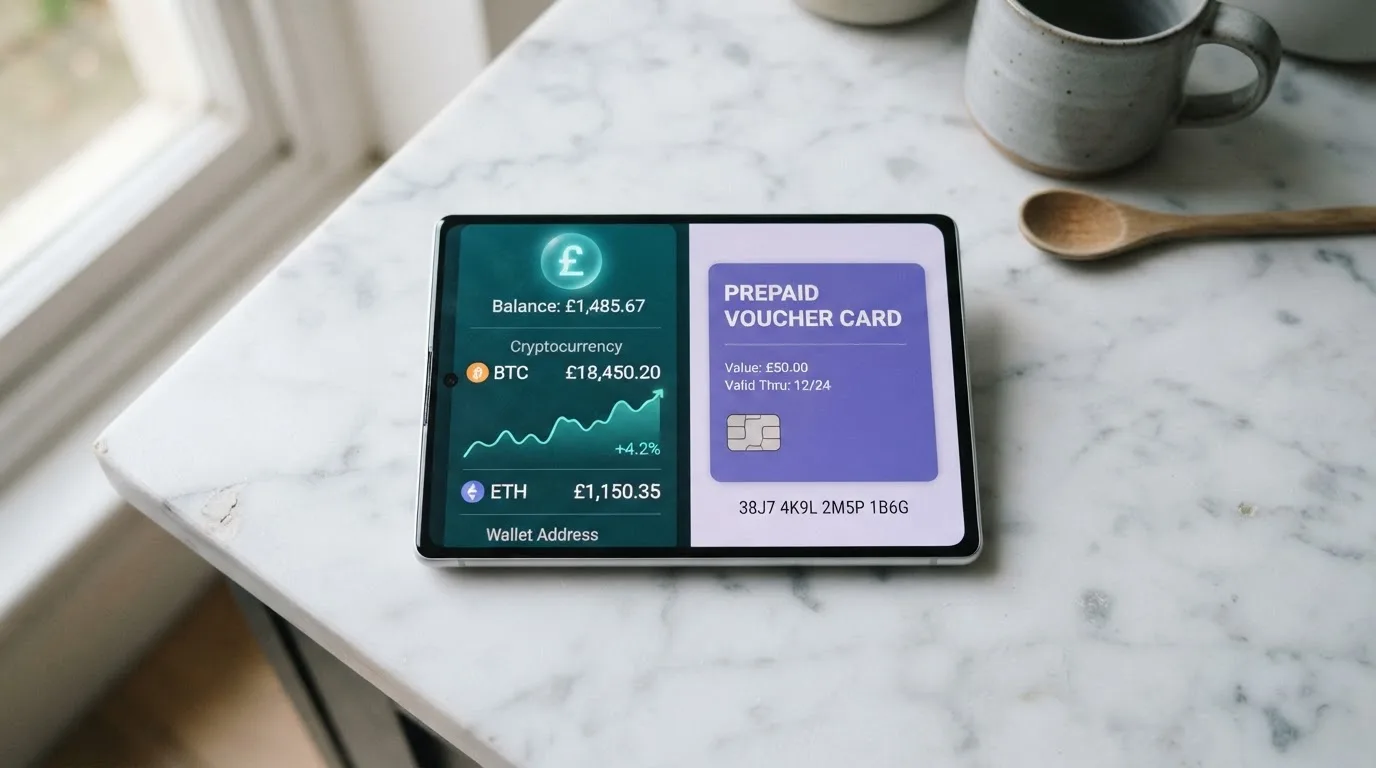
The paysafecard-funded variant is closer to home. A paysafecard is a prepaid voucher sold in UK shops, bought with cash, and redeemed online through a 16-digit PIN. The Gambling Commission’s rules treat a paysafecard deposit exactly the same as a debit card deposit for licensing purposes, so a 100% match paid for with a paysafecard voucher is bound by the same 10x wagering cap and the same identity-verification steps as one paid for with a Visa debit card. The voucher does change one thing. It changes how the money reaches the casino, not how the bonus itself behaves.
The fundamentals: UK rules that shape every 100% bonus
Every 100% bonus a British player sees has been shaped by the same licensing regime, and reading the offer without reading the regime is how players misread it. The Gambling Commission, set up under the Gambling Act 2005 and sponsored by the Department for Culture, Media and Sport, regulates commercial gambling in Great Britain (England, Scotland and Wales; Northern Ireland sits under separate legislation). Since the Gambling (Licensing and Advertising) Act 2014 any operator taking customers in Great Britain needs a Commission operating licence, wherever the operator is based. A Maltese, Curaçao or Gibraltar licence alone does not authorise a site to take British players. The Commission licence is what does.
The register is the whole proof. On 18 September 2026 the Commission’s public register of gambling businesses listed 139 businesses holding an active remote casino operating licence, and the same register held 1,065 active and 361 white-label domain entries — a white-label entry being a domain that trades under another company’s licence. The register is searchable online and downloadable as CSV or Excel. Every brand mentioned later in this article sits on it.
A licence number on the register follows a fixed shape. The format is account-R-number-suffix. The leading six digits are the licence holder’s account number, the “R” marks the licence as remote (online) rather than non-remote (land-based), and the trailing three-digit suffix distinguishes individual licence instances under the same account. So Ladbrokes (account 54743, licence 054743-R-330863-014) and Gala Bingo (same account 54743, same licence 054743-R-330863-014) sit on one licence between them. They are not independent operations, and the bonus terms one offers are not necessarily mirrored by the other, though they share a compliance back office.
Age and identity. The minimum age for any gambling product in Great Britain is 18. Since 7 May 2019 every licensed operator has had to verify a player’s name, address and date of birth before the first deposit and before any play, with a 72-hour window during which unverified accounts cannot deposit. Anonymous play at a licensed site is not available. The verification uses electoral roll, credit-reference and public-records data, and it runs automatically behind the scenes for most British players, which is why a fresh account at a UK brand rarely asks the player to upload a passport.
Bonus terms: the 10x cap and the no-mixing rule. Two Commission rules from 19 December 2025 define the modern UK bonus landscape. First, the wagering requirement on any casino bonus, including a 100% match, is capped at 10x the bonus amount. A £100 bonus can require no more than £1,000 of qualifying turnover. Anything above that is no longer compliant. Second, mixed-product offers — an example the Commission named is “bet on sport, receive casino spins” — are banned. A 100% casino bonus cannot be tied to a sports bet, and a sports free-bet cannot be paid out as casino bonus funds. The intent is to stop bonuses from pulling players across products they did not sign up for.
Stake limits and game speed. Slots at a UK-licensed site carry two hard ceilings set in 2025. From 9 April 2025 the maximum stake per game cycle is £5 for players aged 25 and over. From 21 May 2025 it is £2 for players aged 18 to 24. A “game cycle” is one full spin, including any feature rounds it triggers, so the £2 and £5 caps apply to the total amount at risk across the cycle, not just to the base spin. Alongside the stake cap, a single spin must take at least 2.5 seconds, auto-play is banned (every spin requires an active click), and losses presented as wins — a slot that flashes “£50 win” while the spin actually lost £10 of real money — are banned as a presentation.
Deposits, not losses: the limit-prompt rule. The Commission does not set a deposit or loss ceiling, but from 31 October 2025 every licensed operator has to prompt a player to set a financial limit before the first deposit is accepted. The prompt is mandatory; setting the limit is the player’s. An offer such as a 100% match sits behind that prompt. The player cannot claim the offer without first seeing and dismissing (or accepting) the deposit-limit screen. For someone planning to play through a 100% match, this prompt is the natural moment to set a realistic ceiling, and the offer does not move that ceiling on its own.
Payments and credit. From 14 April 2020 the Gambling Commission banned the use of credit cards to fund any gambling in Great Britain, online or offline, with the single exception of non-remote lotteries paid face-to-face. Credit cards routed through e-wallets are also caught. Funding an e-wallet with a credit card and then paying the casino from that wallet is not a way around the rule. Debit cards and bank transfers were and are unaffected. The Commission’s own estimate, published before the ban, was that around 800,000 UK consumers had used credit cards to gamble in 2018, and that 22% of online gamblers who funded play that way were classed as problem gamblers. Those figures explain the policy.
Tax. Players pay no tax on gambling winnings in the UK. The tax sits on the operator as Remote Gaming Duty, raised from 21% to 40% from 1 April 2026 — model only, the actual rate in any given year should be checked with HMRC. For the player the only arithmetic that matters is the wagering rule. The tax does not eat into a withdrawal.
Offshore. Providing gambling to people in Great Britain without a Commission licence is an offence under section 33 of the Gambling Act 2005. The Commission disrupts unlicensed sites — cease-and-desist notices, payment and hosting referrals, search-engine delisting — but has no ISP-blocking power. The penalty never lands on the player. What the player loses by going to an unlicensed site is protection. No GAMSTOP. No Commission complaints route. No approved alternative dispute resolution. And no 10x cap. The offshore 100% match typically arrives with a 30x to 40x wagering requirement.
Responsible play inside a 100% bonus
Three pieces of player protection shape how a 100% bonus actually plays at a UK-licensed site, and each one of them is a rule the offer does not get to override.
GAMSTOP is the national online self-exclusion scheme. Since 31 March 2020 every GB-licensed online operator has been required to take part in it, and a player who has registered with GAMSTOP cannot deposit or play at any participating site for the duration of their exclusion. Self-exclusion periods are six months, one year or five years. None of them can be cancelled early, and the registration runs across every UK brand at once, not just the one where the player first signed up. A 100% welcome offer is not available to a player with an active GAMSTOP registration, because the registration blocks the first deposit in the first place. That is the design. A player who has decided to take a break cannot be tempted back in by a marketing email.
Financial vulnerability checks are the second piece. From 28 February 2025 a licensed operator has to run an affordability check at the point a player’s net deposits cross £150 in a rolling 30-day window. The check uses publicly available data, not the player’s own bank statements — electoral roll, court records, sanctions lists, the usual credit-reference sources — and it is calibrated to flag players whose financial position cannot comfortably support the level of gambling they are doing. The £150 trigger is the threshold at which the check runs automatically; the wider financial risk assessments the Commission has signalled are not yet in force. A 100% match on a £150 deposit is exactly the kind of moment the rule was designed for.
Setting a deposit limit is the third. There is no national deposit ceiling, and the operator’s prompt to set one is the moment the player sets their own. For a player taking a 100% match the calculation is straightforward. The offer doubles the deposit, so a £200 cap becomes £400 of playable money but only £200 of real money at risk. Setting the cap before the deposit is what the prompt is for, and saying no to the prompt by setting a generous number is a choice the rule allows but rarely rewards.
Paysafecard funding, the payment’s third flavour, sits inside all three rules. A paysafecard voucher bought with cash at a UK shop still counts as the player’s money. It counts towards the GAMSTOP registration if one is open, it counts towards the £150 vulnerability-check trigger, and it is captured by whatever deposit limit the player has set. The mechanism is the same as a debit card for licensing purposes. The difference is psychological. A player buying a £50 paysafecard voucher with cash is choosing to spend that £50 before any bonus offer is in front of them, and that ordering — cash first, offer second — is what the rule is trying to preserve.
Anonymous play is not available at a licensed site. The 7 May 2019 verification rule has been in force long enough that any new account at a UK-licensed brand now opens with the player’s name, address and date of birth confirmed against public data before the first deposit clears. An offer that promised “no verification, no problem gambling checks” is not a UK offer.
Helpline. GamCare runs the National Gambling Helpline, and GambleAware funds treatment and research across Great Britain. Both are free, both are confidential, and a player who feels the 100% match has pulled them into play they did not plan can reach either without going through the operator.
Funding the deposit: cards, wallets, and paysafecard
How the deposit is funded matters because the funding method decides whether the offer is even available, how quickly the bonus credits, and whether any of the bonus can be withdrawn at the end.
Debit cards are the default. Visa Debit and Mastercard debit cards issued by a UK bank are accepted at every GB-licensed brand. The credit-card ban of 14 April 2020 stopped the credit-card versions of those same brands from working, but a debit card funded from a current account does. The deposit clears in seconds, the bonus credits within minutes in most cases, and there is no e-wallet layer in the way. The catch is on the way out. Most UK operators return withdrawals to the same debit card used for the deposit, and a card that has expired, been replaced or been closed since the deposit can stall the withdrawal.
Bank transfer is the second universal method. UK bank transfers typically route through the Faster Payments Service, launched in 2008 and operated by Pay.UK. Faster Payments runs 24 hours a day, seven days a week, and most payments arrive instantly or within a couple of minutes, with a per-transaction scheme limit of £1,000,000 — though individual banks routinely impose lower limits on their own customers. A bank transfer deposit clears in roughly the same time as a debit card deposit, and the withdrawal returns to the same bank account by the same route. The Bank of England is not a direct participant in Faster Payments but oversees the system’s safety and stability and provides final settlement, which is why a Faster Payments transfer carries the same standing as a debit card for any UK operator.
Apple Pay is widely accepted at UK-licensed brands and uses the same underlying debit card rails. Apple Pay launched on 20 October 2014, initially supporting only US-issued payment cards; UK card support followed on 14 July 2015. In-store Apple Pay works through near-field communication with a contactless terminal, and on an iPhone with Face ID an in-store purchase is authenticated by double-clicking the side button; on a Touch ID model it is the Home button. For online and in-app payments the same tokenised flow runs without the contactless step. Apple Pay replaces the actual card number with a device-specific tokenised Device Primary Account Number and a dynamic security code per transaction, which is why an Apple Pay deposit at a UK casino is, from the operator’s perspective, a debit card deposit — and therefore still subject to the credit-card ban, even though Apple Pay is debit-only on the cards it supports in the UK. The rule from Apple itself: a supported card from a participating issuer is required, and Apple Pay is not available in all markets. The November 2024 US Consumer Financial Protection Bureau rule that brought large nonbank digital wallet operators, including Apple Pay, under bank-like federal oversight is an American development and does not change UK status. The European Commission’s 2020 investigation into Apple Pay’s control of iPhone NFC hardware is similarly unresolved for the UK. Neither affects whether Apple Pay funds a 100% match in Britain.
AstroPay is a global digital wallet offering online payments, virtual and physical debit cards, and peer-to-peer transfers. Founded in 2009 and headquartered in Uruguay, AstroPay spun off its payment-processing arm dLocal as a separate company in 2016, and it now operates through licensed entities in several jurisdictions. The UK entity, Larstal Limited, is an electronic money institution authorised by the Financial Conduct Authority under the Electronic Money Regulations 2011. The Isle of Man entity is licensed by the Isle of Man Financial Services Authority for money transmission; the Brazilian entity is authorised by the Brazilian Central Bank as an electronic currency issuer; the Danish entity, Larstal Denmark ApS, is authorised by the Danish Financial Supervisory Authority. AstroPay serves users across markets including Argentina, Australia, Brazil, Canada, Colombia, Denmark, Spain, the United Kingdom, the United States and Uruguay. For a UK player funding a 100% match, AstroPay behaves like any other e-wallet deposit. The wallet is funded first (by bank transfer, debit card or local alternative), and the casino sees an e-wallet-to-merchant transfer. Withdrawal typically returns to the wallet, and from the wallet to the player’s bank — a two-step process that adds a day to the payout compared with a direct debit card.
Paysafecard is the payment’s funding method of choice and the cleanest in one respect. A paysafecard is a prepaid voucher sold in UK shops and redeemed online through a 16-digit PIN, paid for in cash at the till. The voucher has a fixed value (£10, £25, £50, £100 or £250), the PIN is spent at a single merchant or in parts until the balance is zero, and no bank account or card is involved in the funding. From the operator’s side the deposit is a paysafecard-to-merchant transfer with no card data exchanged. From the Gambling Commission’s side it counts as a player-funded deposit and is treated under the 10x cap, the GAMSTOP check and the £150 vulnerability trigger like any other.
Minimum deposit. Every 100% match offer has a minimum qualifying deposit, usually £10 or £20, which sets the floor for the bonus. A £10 deposit that triggers a 100% match up to £100 gives the player £10 bonus and £20 balance; a £20 deposit gives £20 bonus and £40 balance. The minimum is set by the operator and is the cheapest way to test whether the offer is even worth pursuing before committing a larger deposit.
Reading the small print: wagering, time, and the cost of a 100% match
This is the section where the page does its arithmetic. A 100% welcome bonus is sold as “free” money. It is sold that way because the marketing is built around the doubling, and the doubling is the only part of the offer the player sees in the email subject line. The wagering requirement, the time limit, the game weighting, the maximum stake and the game restrictions are all in the small print, and the small print is where the offer’s real cost lives.
Wagering requirements. A wagering requirement is a multiple of the bonus that has to be turned over in qualifying bets before the bonus balance can be withdrawn. A 10x requirement on a £100 bonus means £1,000 of qualifying bets; a 30x requirement on the same £100 bonus means £3,000. Under the UK rules in force from 19 December 2025 the maximum any operator can set is 10x, which is a hard ceiling rather than a typical figure. Some operators run lower (5x, even 1x on a few no-wagering spin offers) and most still run at the 10x cap. None can go above it.
What “qualifying” means. Not every bet counts in full. Slots typically count 100% of the stake towards wagering; roulette and blackjack count less (often 10% to 20%, sometimes nothing); some games are excluded entirely. A player who clears a £1,000 wagering requirement entirely on roulette at 20% weighting has actually staked £5,000, not £1,000. A player who clears it entirely on an excluded game has cleared nothing. The game weighting is set by the operator and is part of the small print.
The maximum stake rule. Most UK 100% match offers cap the bet size while a bonus is active, often at £5 or less per spin. The £5 ceiling is also the regulatory maximum stake for over-25s on online slots, so the operator’s bonus rule and the Commission’s stake rule tend to land in the same place. A player who exceeds the bonus-specific cap, even on a single spin, usually forfeits the bonus and any winnings from it. That is the single commonest way a cleared bonus becomes an unwithdrawable one.
Time limits. A 100% bonus usually has to be used within 7 to 30 days of being credited. After that, the bonus expires and any bonus balance still sitting in the account is removed. A player who clears the wagering requirement inside the window keeps the bonus balance (subject to any maximum-cashout rule); a player who does not, loses it.
Maximum cashout. Some 100% match offers cap the amount that can be won from bonus play — “max bonus win £500” or “max withdrawable from bonus funds 5x the bonus”, for example. Under the UK rules the maximum-cashout rule on welcome bonuses has tightened in recent years, but a cap can still apply. The check is in the offer’s own terms.
The arithmetic, at three deposit sizes. The 10x cap is what makes this calculation possible without going round in circles. Take a £20 deposit on a 100% match up to £200 — the player gets a £20 bonus. Required turnover at 10x: £200. At a typical slot stake of £0.50 per spin, that’s 400 spins. At roughly 5 seconds per spin (the practical floor on most slots, sitting well above the regulatory 2.5-second minimum), that is about 33 minutes of play.
Take a £100 deposit on the same offer — the player gets a £100 bonus. Required turnover at 10x: £1,000. At £0.50 per spin: 2,000 spins. At 5 seconds per spin: about 2 hours and 47 minutes of play.
Take a £200 deposit, which lands at the cap on this offer — the player gets a £200 bonus. Required turnover at 10x: £2,000. At £0.50 per spin: 4,000 spins. At 5 seconds per spin: about 5 hours and 33 minutes.
The wider the bonus, the wider the time commitment. The 10x cap is the same multiple in every case, but the absolute turnover rises with the bonus, and so does the play time. A player who thinks of the offer as “£200 for free” is right about the credit and wrong about the time the credit costs. The cost shows up as hours at the screen rather than as a fee on the bank statement, which is partly why the offer reads as a gift at all.
What that play time means for the player. The expected loss across these sessions is a separate calculation, but it is not a small one. A £1,000 turnover at a slot RTP of 96% carries an expected loss of £40; a £2,000 turnover carries an expected loss of £80. The bonus credits £100 or £200 to the player’s balance; the expected loss across the cleared wagering eats into that credit. A player whose bonus is £100 and whose expected loss across the wagering is £40 has effectively paid £40 for £100 of play money, with whatever small remaining balance is theirs to keep. That is the deal. The 10x cap makes it a better deal than the 30x deals at offshore sites, where the same £100 bonus would cost closer to £120 in expected loss to clear. But it does not make it a free deal.
A figure worth keeping in mind: the time. The doubling happens in a few seconds; clearing the wagering requirement happens across hours of play. A player who values their time at a positive number will price that into the offer.
Operator landscape: jurisdiction, licence, and ten UK-licensed brands
Ten brands currently on the Gambling Commission’s public register can be compared against a 100% welcome offer in 2026. All ten hold an active remote casino operating licence, all ten accept UK players, and all ten are bound by the 10x wagering cap, the GAMSTOP requirement and the £150 vulnerability-check trigger described above. What differs between them is the licence holder, the parent operation and the brand’s specialism.

The register itself does not carry bonus terms, so the table below records what the register does hold — the operating company, the licence number and the listed status of the domain — and leaves each brand’s current 100% match for the reader to check on the operator’s own promotions page. Every brand listed is shown on the register as an active domain against the named licence account on the snapshot date in the line at the top of the page.
| Brand | Licence holder and remote casino licence | Domain status | Current 100% match offer |
|---|---|---|---|
| Sky Vegas | Bonne Terre Gaming Limited · 065519-R-339675-002 | Active | — |
| Midnite | Dribble Media Limited · 042647-R-321653-022 | Active | — |
| PokerStars | Stars Interactive Limited · 039108-R-319334-026 | Active | — |
| Unibet | Platinum Gaming Limited · 045322-R-324275-019 | Active | — |
| Ladbrokes | LC International Limited · 054743-R-330863-014 | Active | — |
| BetVictor | BV Gaming Limited · 039576-R-319370-028 | Active | — |
| Jackpotjoy | Gamesys Operations Limited · 038905-R-319430-022 | Active | — |
| 888casino | 888 UK Limited · 039028-R-319297-014 | Active | — |
| Gala Bingo | LC International Limited · 054743-R-330863-014 | Active | — |
| Casumo | Recro Limited · 061549-R-336718-002 | Active | — |
What the licence number tells you. Every licence number above follows the same shape described earlier in this page: the leading six digits are the account number, the “R” marks the licence as remote (online), and the trailing three-digit suffix distinguishes individual licence instances. Sky Vegas and Casumo, at opposite ends of the account-number range in this set, are both held by single-licence operating companies with one licence instance each. Ladbrokes and Gala Bingo, by contrast, share the same account (54743) and the same licence number (054743-R-330863-014) under LC International Limited, which means they share a compliance back office even when their bonus pages differ.
Now the ten operator notes, each closing on what the entry suits.
Sky Vegas. Sky Vegas is the Sky-branded slot product, operated by Bonne Terre Gaming Limited under licence 065519-R-339675-002 (account 65519). The Sky name brings UK recognition; the licence sits with a separate gambling-licensed operator. For a player who values the Sky branding on the casino side, this is where the licence sits, and the bonus is the operator’s offer within the cap.
Midnite. Midnite runs under Dribble Media Limited, with its domain listed on the register (account 42647, licence 042647-R-321653-022). Dribble Media is a smaller operating company than most in this set, and a smaller operator is one reason the welcome offer is worth a direct look. The current 100% match sits on Midnite’s own promotions page; the comparison with the rest of this list is on those terms.
PokerStars. PokerStars’ UK casino runs alongside the poker room under Stars Interactive Limited, licence 039108-R-319334-026 (account 39108). For a player whose gambling already runs through the Stars product, the casino bonus is part of one account rather than a separate brand. A player who has not used Stars before can still take the casino offer on its own terms, but the licence covers more than just slots.
Unibet (unibet.co.uk). Unibet’s UK licence sits with Platinum Gaming Limited, account 45322, licence 045322-R-324275-019. The casino bonus is one product line among several on this account, and the wider product set is the differentiator. The comparison with the rest of this set is on the operator’s own terms page.
Ladbrokes. Ladbrokes runs under LC International Limited, account 54743, licence 054743-R-330863-014 — the same account that runs Gala Bingo. For a player comparing these two brands, the bonus terms can differ while the compliance back office does not. Both are bound by the same regulatory floor, and both name their current 100% match on the operator’s own promotions page.
BetVictor. BetVictor’s UK licence is held by BV Gaming Limited, account 39576, licence 039576-R-319370-028. The brand sits in the mid-tier of UK gambling operators by recognition, and the bonus terms are set within the cap. For a player in that middle band of familiarity, this is one of the licensed options to weigh.
Jackpotjoy. Jackpotjoy’s licence is held by Gamesys Operations Limited, account 38905, licence 038905-R-319430-022. The “Operations” suffix in the company name fits a multi-product UK operation, and Jackpotjoy’s casino bonus is one product on this account. For a player whose interest is mainly slots, the brand’s wider portfolio is the question to ask before reading the bonus terms.
888casino. 888casino runs under 888 UK Limited, account 39028, licence 039028-R-319297-014. The bonus is the operator’s offer within the cap, and the comparison with the rest of the set is on the operator’s own terms page. The structural fact worth knowing is that the licence sits with the 888 UK entity, separate from the international 888 group.
Gala Bingo. Gala Bingo shares LC International Limited’s licence with Ladbrokes, account 54743, licence 054743-R-330863-014. For a player who has ruled in or out Ladbrokes on compliance grounds, Gala Bingo is on the same compliance decision; the bonus is the operator’s offer, set on the operator’s own page.
Casumo. Casumo’s UK licence sits with Recro Limited, account 61549, licence 061549-R-336718-002. The bonus is the operator’s offer within the cap. The verdict for a player comparing the ten is that Casumo is one of the smaller UK entries in this set by operating-company size, and the welcome offer is the place where that size can show up in the player’s favour.
Questions readers ask about a 100% casino bonus
| Payment Method | Typical Processing | Note |
|---|---|---|
| Debit Card | Instant | UK bank issued |
| Bank Transfer | Instant | Faster Payments Service |
| Paysafecard | Instant | Voucher-based |
Frequently asked questions
How does a 100% casino bonus work?
A 100% match bonus credits the player with a sum equal to the first qualifying deposit, up to a stated cap. A £50 deposit on a 100%-up-to-£100 offer becomes £100 in playable balance. The credited sum is bonus funds, withdrawable only after the wagering requirement is cleared under the offer’s own terms. Until that happens, the bonus sits in a separate balance from real money.
Is there a maximum amount a 100% match bonus will cover?
Yes. Every 100% match offer names a maximum bonus amount — typically £50, £100 or £200 — above which the deposit is matched only up to that cap. A £300 deposit on a 100%-up-to-£100 offer still earns only £100 in bonus; the remaining £200 sits as cash balance. The cap is the single number that decides the upper end of the offer.
Can I claim a 100% bonus using paysafecard?
Yes, at a UK-licensed operator that accepts paysafecard. The Gambling Commission treats a paysafecard deposit the same as a debit card deposit for licensing purposes, so the 100% match is available if the operator lists paysafecard as a qualifying funding method and the minimum qualifying deposit is met. The 10x wagering cap applies regardless of how the deposit is paid for.
What wagering requirement applies to a 100% deposit match under current UK rules?
From 19 December 2025 the Gambling Commission has capped wagering requirements on casino bonuses at 10x the bonus amount. A £100 bonus therefore requires £1,000 of qualifying turnover before withdrawal; a £200 bonus requires £2,000. The cap is a ceiling — no UK-licensed bonus can go higher — but some operators run lower.
How long do I have to use a 100% bonus before it expires?
Most UK-licensed welcome bonuses set a window of 7 to 30 days from the credit date. Outside that window any unused bonus balance expires and is removed from the account. The exact window is set out in the offer’s own terms and is one of the first things to check before claiming, particularly for a player who plans to play across more than one session.