
Online Casino Tournaments UK 2026 — Cost, Rules and Player Reality
Online casino tournaments UK 2026: the cost behind the leaderboard
A slot tournament is a marketing wrapper around the same slot machine you can play at any other time, with a clock and a prize ladder bolted on. The Gambling Commission’s public register recorded 139 businesses holding an active remote casino operating licence on 18 September 2026, and every one of them has the option to run a tournament — the format sits inside the licence they already hold, not a separate product. That is the whole shape of the British market, and it is the starting point for reading every tournament offer that crosses your screen.
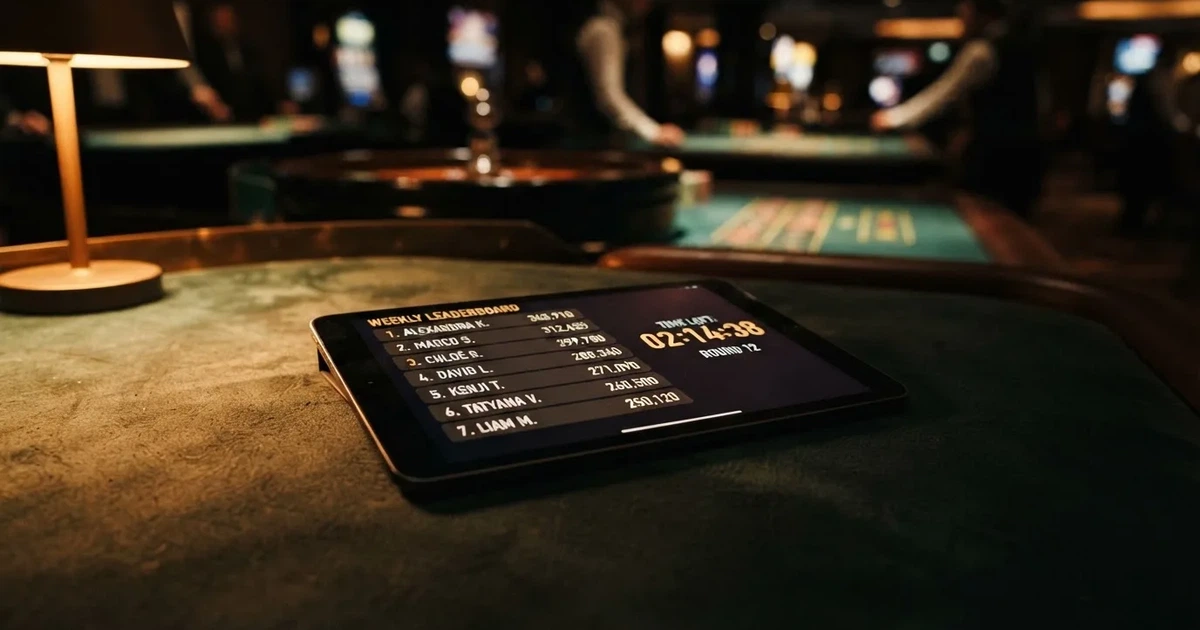
Verified against the Gambling Commission’s public register on 8 November 2026.
Table of Contents
- Slot tournament rules and the formats British casinos actually run
- Where the British regulatory frame lands on tournaments
- Responsible play around competitive formats
- Crypto deposits and tournament entry
- Payout speed after a tournament finish
- Bonuses, free spins and how they fit tournament prizes
- Slot titles and providers on British tournament leaderboards
- The ten operators the British register names
- What the cost actually looks like, in numbers
- What the British player takes from this
- Frequently asked questions
Slot tournament rules and the formats British casinos actually run
The mechanics are simple enough to describe in one breath: players spin a designated slot during a fixed window, each spin adds points to a leaderboard, and the top finishers split a prize pool. The variations, though, change what the entry fee is actually buying.
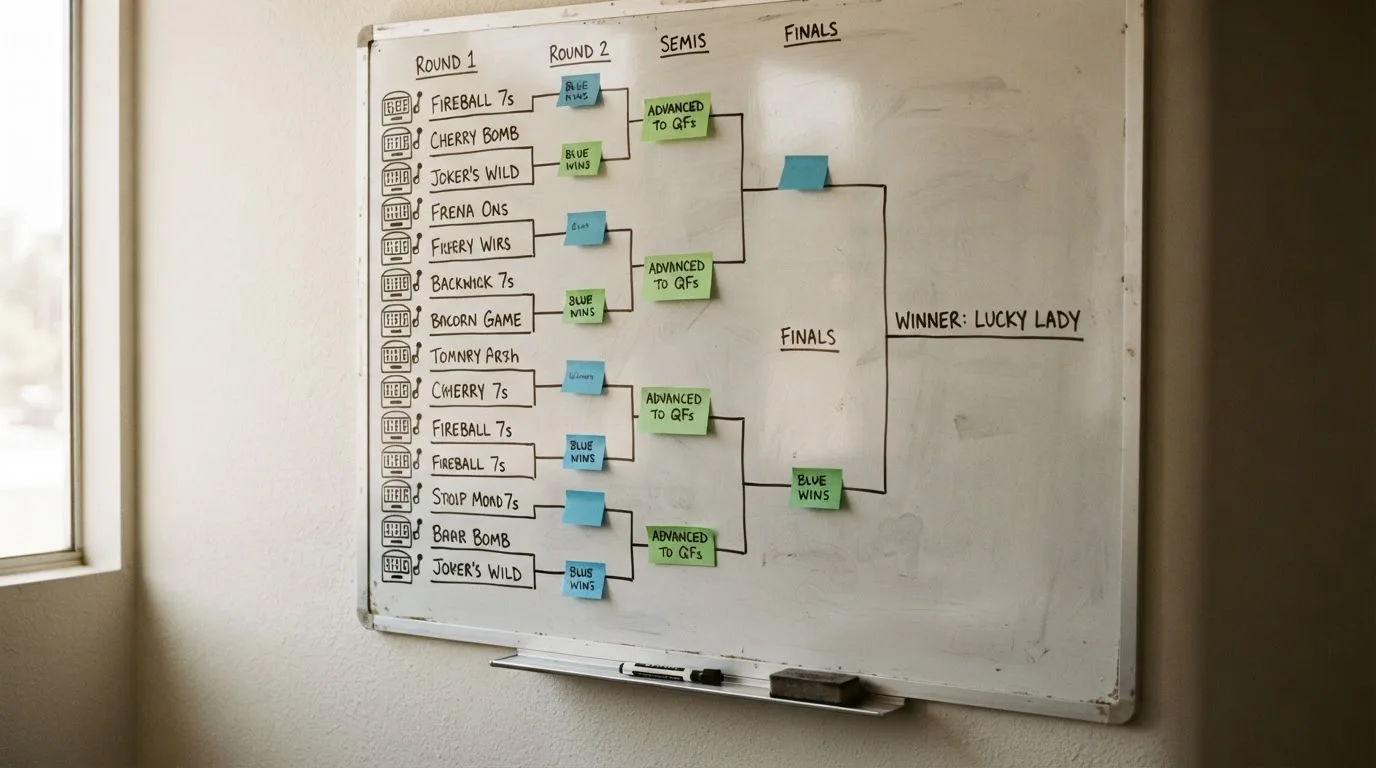
Prize-pool tournaments fund the leaderboard out of a guaranteed pool. The casino sets the prize total up front, players pay an entry fee (or earn entry through qualifying play), and the pool pays out regardless of how many entrants show up. The format suits a player who wants to know the headline prize before committing.
Freerolls carry no entry fee. The casino funds the pool as a promotional cost, often as part of a welcome package or a loyalty tier reward. A freeroll’s prize fund is usually modest — the casino is buying the player’s time and attention, not their bankroll — and the field tends to be wide, which means a single big spin carries more weight in the final ranking than it would in a paid event.
Winner-takes-all events collapse the prize ladder to one entry. Either the leader at the end of the window takes the pool, or nobody does (in which case some operators carry the pot forward to the next event). The format is rare in the British market and tends to sit inside a bigger tournament schedule rather than running on its own.
Qualifying rounds are two-stage events: a wider opening field narrows to a finals table, and only finalists compete for the main prize. Qualifying events are how a casino turns a single tournament into a week-long promotion.
The score a leaderboard tracks varies. Most events count points-per-win, where the payout multiplier on a spin determines its score — a 10x win scores more than a 5x win. Others count points-per-spin regardless of payout, which rewards volume over luck. A handful of live-casino formats count points-per-hand at blackjack or roulette, but those are a different product line and run under the same licence framework. Whichever format applies, the score is reset at the end of the window, and what mattered at spin 4,999 does not carry over to next week’s event.
Entry routes and what they cost
Three ways in, and the cost differs more than the marketing suggests. Paid entry is the cleanest deal: you know the fee, you know the pool, and your stake is the fee plus whatever you spend spinning during the event. Freeroll entry is “free” in cash terms but not in time — you still spin through the qualifying window, and the casino is hoping you keep playing once the event ends. Qualifying-play entry rewards players who reach a threshold of real-money spins on a designated title, and the cost there is whatever you spent reaching the threshold; whether the tournament prize covers that cost depends on where you finish.

The 10x wagering requirement cap in force since 19 December 2025 limits how aggressively a casino can weight bonus funds toward tournament prize pools, because the same cap applies to any bonus or free-spin winnings that get credited to the player’s account. A tournament paying out in bonus funds is now capped at 10x playthrough before withdrawal — a sharp change from the 30x and 40x multiples that were routine in earlier years. Prizes paid in cash, by contrast, are not subject to the cap at all, and a tournament paying cash prizes pays exactly what the leaderboard says.
Where the British regulatory frame lands on tournaments
The Gambling Commission does not regulate tournaments as a separate product. The licence a brand holds to run online slots is the same licence that authorises it to run a tournament on those slots, and every consumer-protection rule that applies to a regular slot session applies to a tournament session as well.
The stake cap from 9 April 2025 (£5 per game cycle for players aged 25 and over, £2 for 18–24) is the headline number. A tournament spin is a slot spin, and a £5 cap means a tournament spin cannot exceed £5 either. For a paid-entry tournament, that caps the per-spin risk. For a freeroll, where the player’s “stake” is time rather than money, the cap is still binding on any opt-in buy-back the casino offers.
The credit-card ban in force since 14 April 2020 prevents tournament buy-ins funded by credit card, including credit cards routed through an e-wallet. Debit cards and bank transfers remain the standard route. The auto-play ban from 31 October 2021 and the minimum 2.5-second spin interval limit the pace at which a tournament can run — a casino cannot, in effect, race players through the qualifying window faster than the regulator allows. The “losses disguised as wins” prohibition, the same date, removes a class of celebratory feedback that used to encourage players to keep spinning after a small win.
The verification requirement in force since 7 May 2019 means every tournament player has cleared name, address and date-of-birth checks before their first deposit or any play. A no-deposit tournament is not anonymous entry — it is entry without a deposit, but the verification steps have already happened.
GAMSTOP, the national self-exclusion register, is mandatory for every online licence. A self-excluded player cannot enter a tournament at any licensed operator for the duration of their exclusion, and the check happens at the account level, not the promotion level. The financial vulnerability check at £150 net deposits in a rolling 30-day window, from 28 February 2025, applies to tournament play as much as anywhere else; the prompt to set a financial limit before the first deposit, from 31 October 2025, applies to tournament entry the same way.
The Commission publishes the full list of licence holders and the domains they run. Reading it is the cheapest due-diligence tool a British player has, and it is the source for every licence and domain number cited further down this page.
Responsible play around competitive formats
A tournament is a structure that rewards sustained play. The leaderboard only resolves at the end of the window, the prize is a fixed sum, and the marginal decision a player faces — spin or stop — repeats dozens or hundreds of times during the event. The format is not new, but the way it interacts with online play is sharper than the older arcade equivalents: there is no walking away from the screen, no closing-time chime, no physical coin to count.
Setting a time limit before entering is the practical counter. A tournament window is known in advance — one hour, four hours, a day — and the player who has decided in advance how long they will play has built a wall around the leaderboard’s pull. Setting a separate spend limit for the event, distinct from the player’s usual deposit cap, gives a number to point at when the moment of “one more spin” arrives. The deposit prompt every licensed operator must show before the first deposit does not substitute for this: it covers ongoing play, not a single promotional event.
A self-excluded player on GAMSTOP cannot enter at all, and the protection is the strongest one the British system offers. Time-outs (24 hours, one week, six weeks) are available at every licensed operator and are a useful middle step for a player who feels the format pulling them past where they intended to stop.
GamCare runs the National Gambling Helpline and a chat service, both free and confidential. GambleAware funds treatment and research. Neither is tied to any particular tournament, and either is the right port of call when the leaderboard has stopped being entertainment.
Crypto deposits and tournament entry
Crypto sits awkwardly inside a British tournament framework. The Gambling Commission’s licensing regime requires a UKGC licence for any operator taking customers in Great Britain, and a UKGC-licensed casino cannot run anonymously — verification happens before the first deposit, and the operator must satisfy anti-money-laundering rules that a crypto-only venue does not always meet. The result is that the “cryptocurrency casino with tournaments” niche, in the strict British sense, is narrow: it means a UKGC-licensed operator that accepts crypto deposits through a regulated payments partner, not an offshore casino that runs entirely on coins.
For players who prefer to fund in digital currency, the practical question is whether the operator credits tournament entry in the same way regardless of the deposit route. The honest answer is that licensed operators treat deposits as deposits — the funding rail (crypto, debit card, e-wallet) is separate from the promotion (tournament entry, free spins, bonus cash) — and a £20 crypto deposit and a £20 debit-card deposit credit the same tournament balance at the same site. Where differences appear is in processing speed and in fees: crypto deposits usually clear quickly but may carry a network fee the player absorbs on entry, while debit-card deposits are fee-free but may take a few minutes to confirm.
A British player using crypto at a licensed site is paying in pounds for tournament purposes (the conversion happens at deposit), and the prize pool is denominated in pounds too. The volatility risk sits in the conversion window — between deposit and any withdrawal that includes tournament winnings — and is the player’s exposure rather than the casino’s. None of this changes the stake cap or the 10x wagering requirement cap: those are set in sterling on the underlying slot, regardless of how the player funded the session.
Payout speed after a tournament finish
A tournament prize payout is a withdrawal, and it travels through whatever withdrawal route the player has set up at the casino. The mechanics depend on the payment method rather than the tournament format.
Faster Payments, the UK bank-transfer scheme operated by Pay.UK since 2008, runs 24/7 and most transfers arrive instantly or within a couple of minutes; a small minority can take up to two hours. The scheme’s per-transaction ceiling is £1,000,000, though individual banks can and do set lower limits on their own customers. For tournament prize money in the range a British casino offers, Faster Payments is the fastest standard route and is the typical timeline for bank-transfer withdrawals from a licensed site.
Debit-card withdrawals go through the card network’s own rails. Visa and Mastercard push these back to the issuing bank, and the practical timeline is one to three working days depending on the issuer; some banks process same-day, others queue overnight. The withdrawal is not instantaneous even when the casino releases funds immediately.
E-wallets (PayPal, Skrill, Neteller, Apple Pay where the operator supports it for withdrawals) sit in the middle on speed — usually within 24 hours of the casino’s release, sometimes faster. Apple Pay’s UK availability dates from 14 July 2015, when UK-issued cards became supported; the underlying payment rail is card-based, so withdrawal support depends on whether the issuing bank and the casino have completed the relevant card-network setup. AstroPay’s UK entity, Larstal Limited, is an electronic money institution authorised by the Financial Conduct Authority; payouts to an AstroPay wallet are subject to the wallet’s own terms and the casino’s processing queue.
The Faster Payments Service is the relevant UK context because bank transfers within Britain route through it; the Bank of England oversees the system’s safety but is not a direct participant. For a tournament prize, the timeline from “leaderboard finalised” to “money in the bank account” is typically under an hour for bank transfer, one to three working days for debit card, and within 24 hours for most e-wallets. The casino’s own processing time is the first variable, and a casino that holds withdrawals for manual review extends every timeline above.
The 10x wagering cap that took effect on 19 December 2025 applies to any bonus-component prize paid from a tournament, and the casino cannot lift that cap for a “premium” event. A tournament paying out pure cash has no wagering requirement at all; a tournament paying out bonus funds is capped at 10x.
Bonuses, free spins and how they fit tournament prizes
A tournament prize can be paid in three shapes: real cash, bonus funds, or free spins. The shape changes what the player keeps.
Real cash pays out exactly the prize-fund share and can be withdrawn as soon as the casino’s standard withdrawal queue clears. There is no playthrough, no cap on winnings from the prize, and no further condition beyond the usual account-verification gate.
Bonus funds carry the wagering requirement that has to be cleared before withdrawal. The 10x cap in force since 19 December 2025 means a £50 bonus prize requires £500 in qualifying wagering before the bonus and any winnings from it become withdrawable. The cap also ended mixed-product bonuses — a casino can no longer offer “bet on the football and get casino spins” as a single package — which simplifies what a tournament prize looks like on the small print. A player reading “10x wagering” on a tournament prize should multiply the prize amount by 10 to find the qualifying turnover, and treat the figure as the work the prize requires before it is theirs.
Free spins as a prize are bonus funds in disguise. The spin value is fixed (typically £0.10 or £0.20 per spin), the number of spins is fixed, and the winnings from the spins are credited as bonus funds subject to the same 10x cap. A 100-spin package at £0.10 with a 10x wagering requirement on winnings means: £10 of nominal spin value, winnings subject to playthrough equal to 10x whatever the spins actually return, capped at the casino’s stated maximum conversion from bonus to cash.
What the casino does NOT advertise openly is the cost of a bonus prize relative to its headline value. A £100 cash prize is £100; a £100 bonus prize is £100 minus the expected loss from the qualifying wagering, which is the player’s real cost of clearing the requirement. The expected-loss calculation is the same arithmetic the player would run on any other bonus offer, and the 10x cap has compressed but not eliminated the gap between headline and net value.
The wagering band at a stake-cap world
The 10x wagering cap interacts with the £5 per-spin stake ceiling to set the realistic work a bonus requires. A £100 bonus paid as bonus funds needs £1,000 of qualifying turnover; at the £5 maximum stake that is 200 spins. At the 2.5-second minimum interval set by the Gambling Commission’s auto-play rules, 200 spins run roughly eight minutes and twenty seconds of actual play — a number that does not include time between spins, bonus-feature animations, or any pause the player takes. The point of the comparison is not that eight minutes is onerous; it is that the player’s “real” cost is the expected loss across those 200 spins at the game’s return-to-player, which at a 96% RTP would be £40 in expected value. A bonus that pays £100 nominal but costs £40 to clear is worth £60 net, and that is the figure the player should compare to a straight-cash prize.
For a smaller bonus, the picture compresses. A £20 bonus requires £200 of wagering at 10x — 40 spins at £5, or roughly a minute and forty seconds of uninterrupted play — and the expected loss on those 40 spins at a 96% RTP is £8, leaving a net bonus value of £12. The smaller the bonus, the larger the proportional impact of the expected loss; a player who values time will weigh the net value against the time-cost of clearing it, and a smaller bonus often loses on that comparison.
A bonus that pays out as free spins rather than bonus cash inherits the same compression: the wagering runs on the winnings, not on the spin value, and a low-volatility slot tends to return most of the spin value as winnings subject to playthrough. A high-volatility slot can return far less, leaving the player with the spin value and a small bonus-fund top-up — which is precisely the case where the “free spins” framing flatters the offer.
Slot titles and providers on British tournament leaderboards
The titles a casino puts on its tournament schedule are not the same as the titles it advertises on the homepage. A tournament needs a slot that runs cleanly at high spin volume — short bonus features, predictable hit frequency, no bonus-buy mechanics that would let a player skip the base game — and the providers whose games fit that profile dominate the schedule.
Pragmatic Play’s slots are the most common tournament fixture at UK-licensed operators. The provider’s catalogue includes high-volatility titles with bonus-buy options that are disabled in tournament play, plus the Drops & Wins promotional framework that runs weekly prize pools across participating operators. A Pragmatic Play tournament slot is typically a 5-reel, 20-to-50-payline game with a free-spins feature that can be retriggered; the volatility class varies by title, but the base-game hit frequency is high enough to score points reliably across a session.
NetEnt and Red Tiger (the studios under Evolution Gaming) sit on most UK tournament schedules as well. Both run promotional networks that licensees plug into, and both have high-spin-volume titles that score predictably on a points-per-win leaderboard. Evolution’s live-casino products host the blackjack and roulette leaderboards that appear occasionally at licensed operators; those run under a different points system (hands dealt, wins in a row) and are not the same product as a slot tournament.
Play’n GO, Big Time Gaming, Nolimit City and Hacksaw Gaming round out the typical UK tournament library. The first three lean toward higher-volatility titles where a single big spin can dominate a leaderboard; Hacksaw’s catalogue includes several instant-win and scratch-style games that some operators use for short-window tournaments where a single spin decides the result.
The rules research applies across all of them. A slot tournament is a slot tournament, regardless of the title on screen.
The ten operators the British register names
Every brand below sits on the Gambling Commission’s public register, and every brand carries a remote casino operating licence that authorises it to run tournaments for British players. The list is the register’s, not a ranking, and the differences between operators are smaller than the marketing would have you believe — they share a regulator, a stake cap, a wagering cap, and a self-exclusion scheme. What differs is the operating company behind each domain, and the licence number that confirms the licence is live.
| Brand | Licence holder | GB remote casino licence | Domain status | Tournaments offered |
|---|---|---|---|---|
| Paddy Power | PPB Games Limited | 039411-R-319335-010 | Active on the register | — |
| Ladbrokes | LC International Limited | 054743-R-330863-014 | Active on the register | — |
| MrQ | Tek Fox Ltd | 060629-R-337532-004 | Active on the register | — |
| Coral | LC International Limited | 054743-R-330863-014 | Active on the register | — |
| bet365 | Hillside (UK Gaming) ENC | 055149-R-331499-004 | Active on the register | — |
| Betfred | Petfre (Gibraltar) Limited | 039544-R-319290-010 | Active on the register | — |
| Casumo | Recro Limited | 061549-R-336718-002 | Active on the register | — |
| 888casino | 888 UK Limited | 039028-R-319297-014 | Active on the register | — |
| Jackpotjoy | Gamesys Operations Limited | 038905-R-319430-022 | Active on the register | — |
| Gala Bingo | LC International Limited | 054743-R-330863-014 | Active on the register | — |
Three brands — Ladbrokes, Coral and Gala Bingo — sit under a single licence holder, LC International Limited, and the licence number is identical for all three. They are separate brands with separate product lines, but the licence and the regulator behind them are the same. Paddy Power, Betfred, bet365, MrQ, Casumo, 888casino and Jackpotjoy each run under their own licensee.
Paddy Power
Paddy Power’s domain is listed on the Gambling Commission register as an active domain of account 39411, PPB Games Limited, which holds remote casino operating licence 039411-R-319335-010. PPB Games is a single-brand licensee built around the Paddy Power product; the licence covers the full sportsbook-and-casino range and includes the tournaments that PPB runs in-house and through provider networks like Pragmatic Play’s Drops & Wins. It operates on a single licence, which simplifies the consumer-protection route for the player: one licence holder, one complaints process, one dispute path.
Ladbrokes
Ladbrokes sits on licence 054743-R-330863-014 under LC International Limited, the same licence that covers Coral and Gala Bingo further down this list. LC International is the online arm of the Ladbrokes Coral group, and the licence has been renewed through several cycles; the current suffix (-014) marks the most recent variation. These three brands share a licence, a complaints procedure, and a GAMSTOP integration.
MrQ
MrQ runs on a smaller licensee: Tek Fox Ltd (account 60629), holding licence 060629-R-337532-004. MrQ positions itself around no-wagering bonuses, which is a different business model from the major operators and shapes the tournament prize structure — where a Ladbrokes or Paddy Power prize might be paid partly in bonus funds subject to playthrough, an MrQ prize is more likely to be paid in cash. This no-wagering position is a structural choice rather than a marketing slogan: the licence is the same class as every other remote casino licence, and the no-wagering element is an operator-level policy.
Coral
Coral sits on the same licence as Ladbrokes — 054743-R-330863-014, held by LC International Limited (account 54743), with the domain active on the register. The Coral product line is casino-led with a sportsbook attached; the tournament offering follows the same provider-network pattern as its sister brands. The licence is shared rather than separate, meaning the brand is its own product while the licence holder is not.
bet365
Bet365’s domain is an active entry for account 55149, Hillside (UK Gaming) ENC, which holds licence 055149-R-331499-004. The Hillside entity is part of the Bet365 Group, which runs the brand across multiple jurisdictions. Bet365 operates on a significant scale, running a broad slot catalogue and hosting provider-network tournaments, and the licence suffix (-004) reflects several renewals since the original grant.
Betfred
Betfred’s domain is registered to account 39544, Petfre (Gibraltar) Limited, which holds remote casino operating licence 039544-R-319290-010. Petfre (Gibraltar) is the Betfred Group’s online-operating entity; the licence covers the casino and game verticals. While the licence is held at the Gibraltar level — permitted under the Gambling (Licensing and Advertising) Act 2014 — the operating licence is a UKGC licence in form, and subject to the same regulatory rules.
Casumo
Casumo’s domain is registered to account 61549, Recro Limited, which holds licence 061549-R-336718-002. Recro Limited is Casumo’s UK-operating entity; the parent group is Malta-registered. Casumo runs a smaller, more curated slot catalogue than the major operators, and its tournament schedule tends to sit around provider networks rather than bespoke in-house events. The licence is current, and the suffix (-002) is low, indicating fewer renewals compared to other licensees.
888casino
888casino’s domain is registered to account 39028, 888 UK Limited, which holds licence 039028-R-319297-014. 888 UK Limited is part of the 888 Holdings group; the suffix (-014) is the highest on this list, reflecting the longest unbroken renewal history among the operators covered. This licence covers a long-standing casino product, and the tournament schedule is provider-network driven.
Jackpotjoy
Jackpotjoy’s domain is registered to account 38905, Gamesys Operations Limited, which holds licence 038905-R-319430-022. Gamesys Operations runs a portfolio of bingo-led brands, with Jackpotjoy as the casino-facing product. The suffix (-022) is the highest on the list; the licence is current and has been renewed more than any other covered here. Jackpotjoy’s product leans toward bingo and instant-win games, and its slot-tournament offering sits inside a broader games portfolio.
Gala Bingo
Gala Bingo sits on the same licence as Ladbrokes and Coral: 054743-R-330863-014, held by LC International Limited (account 54743), with Gala Bingo listed as an active domain. Like Coral, Gala Bingo’s product line is bingo-led, with casino and slot products attached; the licence coverage is identical to the sister brands. The relevant detail is that the three LC International brands are three faces on one licence, and the player on any of them has the same regulatory protections.
What the cost actually looks like, in numbers
A slot tournament’s cost to the player has three layers: the entry fee (paid or earned), the wagering requirement on any bonus-component prize, and the expected loss during qualifying play. The first layer is visible; the second is in the small print; the third is the figure most players never calculate.
The 10x wagering cap in force since 19 December 2025 sets the second layer. For a bonus prize, the qualifying turnover is ten times the prize amount. The third layer depends on the slot’s RTP and the stake size: expected loss is turnover multiplied by (1 minus RTP). At a 96% RTP and a £5 maximum stake per spin, the expected loss on a £1,000 turnover is £40 — £1,000 × 0.04 — and that is the player’s real cost of clearing a £100 bonus prize.
The realistic band for a tournament bonus at a licensed UK site, after the 10x cap, looks like this:
- A £20 bonus requires £200 of qualifying turnover, or 40 spins at £5. Expected loss at 96% RTP is £8, leaving a net bonus value of roughly £12.
- A £50 bonus requires £500 of qualifying turnover, or 100 spins at £5. Expected loss at 96% RTP is £20, leaving a net bonus value of roughly £30.
- A £100 bonus requires £1,000 of qualifying turnover, or 200 spins at £5. Expected loss at 96% RTP is £40, leaving a net bonus value of roughly £60.
The shape is a band: between roughly 60% and 80% of the headline bonus survives as net value, depending on the slot’s RTP and the stake size used. A player running the calculation at the table above will reach a number in that band; a player reading “£100 bonus” without running the calculation will see only the headline.
For a tournament prize paid as cash rather than bonus funds, the band collapses. The cash prize is the cash prize; there is no wagering requirement and no expected loss on qualifying play (because there is no qualifying play). A £100 cash prize is worth £100, and a player choosing between a £100 cash prize and a £150 bonus prize should compare the bonus prize’s net value, not its headline. At 96% RTP and the £5 stake cap, £150 in bonus funds requires £1,500 of qualifying turnover and carries an expected loss of £60, leaving a net value of £90 — less than the £100 cash prize.
The wagering cap has changed which side of that comparison wins. Before the cap, a casino could set a 30x or 40x multiple on a bonus prize, and the net value of a headline-grabbing bonus could fall well below a smaller cash prize; the 10x cap has closed that gap, and a bonus is now a closer competitor to cash than it was. It is still not equivalent — a 60% to 80% net value is not 100% — but the cost is honest in a way it was not two years ago.
What the British player takes from this
A slot tournament at a UK-licensed operator runs inside a regulatory frame the casino does not set. The £5 stake cap, the 10x wagering cap, the 2.5-second spin interval, the GAMSTOP integration, the verification gate — none of these are operator choices, and a player comparing one operator to another is comparing execution within the same frame rather than choosing between different regulatory regimes. The register is the cheapest way to confirm the licence is current and the domain is active; the small print on the tournament page is the way to confirm the prize is paid as cash, as bonus funds, or as free spins, and what the wagering requirement looks like.
The realistic cost of a tournament bonus is the headline minus the expected loss on the qualifying turnover. The shape of that calculation does not vary across the ten operators above, because the wagering cap and the stake cap are uniform. What varies is the catalogue, the schedule, and the player-experience details — and those are the comparisons worth making once the framework is settled.
Frequently asked questions
How do online slot tournaments work at UK casinos?
A slot tournament is a timed event on a designated slot (or set of slots) where every spin adds points to a leaderboard, and the top finishers split a prize pool at the end of the window. The points system is set by the operator — usually points-per-win, where the payout multiplier determines the score — and the entry is paid, freeroll, or earned through qualifying play. The Gambling Commission’s stake cap and minimum spin interval apply to every spin, including tournament spins.
Can I enter a slot tournament without making a deposit?
Yes, through freeroll events where the entry fee is zero and the casino funds the prize pool as a promotional cost. A no-deposit tournament is not anonymous entry: the operator has already verified name, address and date of birth before any play, as required since 7 May 2019. GAMSTOP exclusions still apply, and a self-excluded player cannot enter at any licensed operator.
What determines my ranking on a tournament leaderboard?
The leaderboard scores whatever the operator defines: most often points-per-win (a 10x win scores more than a 5x win), or points-per-spin regardless of payout. Some events weight by bet size; others hold bet size constant and reward volume. The score is reset at the end of the window — what mattered at spin 4,999 does not carry to next week’s event.
How quickly are tournament prizes paid out?
Prize payout speed depends on the withdrawal route, not the tournament format. UK bank transfers through Faster Payments typically arrive within minutes; debit-card withdrawals take one to three working days; most e-wallets credit within 24 hours. Cash prizes release as soon as the casino’s processing queue clears; bonus prizes release only after the 10x wagering requirement is met.
Do crypto deposits count towards tournament entry the same as card payments?
At a UKGC-licensed operator, yes — the funding rail is separate from the promotion, and a £20 crypto deposit and a £20 debit-card deposit credit the same tournament balance. The casino cannot require a particular payment method for tournament entry. The conversion from crypto to sterling happens at deposit, and the prize pool is denominated in pounds; volatility risk between deposit and withdrawal is the player’s exposure.
What tips help with slot tournament strategy?
The two practical levers are volume and bet sizing. Volume means spinning as often as the 2.5-second interval allows — every second of idle time is points left on the table for a competitor. Bet sizing matters most on points-per-win leaderboards, where a larger stake gives a larger payout multiplier on a hit and a higher score. On points-per-spin leaderboards, bet size is irrelevant and only volume counts. Either way, the player should set a time limit and a spend limit before the event starts.