
Best mobile casino pay with phone credit UK 2026: the choice, the licence, the limits
 Available in GB
Phone-credit deposits at UK mobile casinos sit in a corner of the market that is heavily regulated and lightly understood. The technology — billing a deposit to a mobile account rather than a bank card — is old and well established. The licence regime around it is new and has tightened sharply since 2025. What follows is a practical look at the two together: who offers the route, what the Gambling Commission actually obliges them to do, and what it costs a player to put money in by phone and take it out again.
Last checked against the Gambling Commission public register on 24 September 2026.
Table of Contents
- How paying by phone credit works at a UK mobile casino
- The licence that covers a pay-by-phone-credit casino
- What the licence forces the casino to do — and what it costs a player
- What paying by phone credit looks like in practice
- Who accepts the route — and what the register shows
- What the comparison actually tells a player
- The wagering cap and what it means for a phone-credit deposit
- Apple Pay and the wider wallet picture
- AstroPay and the wider e-money picture
- How a phone-credit deposit compares to a card deposit
- Who each operator suits — and where the comparison lands
- What a player comparing these ten should actually do
- Offshore sites and what a player gives up by going there
- The tax picture
- Putting the choice together
- Frequently asked questions
How paying by phone credit works at a UK mobile casino
Paying by phone credit is a form of carrier billing. When a player chooses the option at the cashier, the casino routes the deposit through a mobile-billing intermediary — historically Payforit in the UK, with Boku the most prominent of the newer providers — and the amount lands on the player’s phone bill or pay-as-you-go credit rather than a debit card or bank transfer. The casino never sees the mobile number used to authenticate the transaction; the intermediary holds the relationship with the carrier and bills the customer.

Payforit grew out of work started in 2005 by the UK founders of the SimPay consortium and launched in 2007; SimPay itself had been founded by four major carriers in February 2003 as the Mobile Payment Services Association, rebranded as SimPay in June 2003, and ceased activity in June 2005. Boku, the mobile carrier-billing company that processes payments by billing transactions directly to a customer’s mobile phone account, was founded in 2009 and is headquartered in London; Boku processes payments across more than 90 countries, serves clients including Google, Sony, Microsoft and Spotify, and states it supports more than 200 local payment methods through a single API.
For a player the flow is short. They enter a deposit amount at the casino cashier, see it confirmed by SMS, and reply to authorise. Two practical consequences follow.
First, the deposit is small. UK mobile-billing intermediaries typically cap a single phone-credit deposit well below the £150 mark that the Gambling Commission’s financial vulnerability check watches. This is not a regulatory limit — it is a market limit set by the intermediary and the operator together — but it has the same effect in practice: a phone-credit deposit is a small, frequent top-up rather than a large lump sum.
Second, a phone-credit deposit cannot be reversed in the way a card transaction can. UK premium-rate telephone numbers used for pay-by-phone services carry a two-part charge — an access charge set by the caller’s phone company and a service charge set by the receiving organisation, with service charges capped between 7p per minute for 084x numbers and £3.60 per minute for 09xx numbers — and the wider premium-rate regime moved back to Ofcom from 1 February 2025 after years under the Phone-paid Services Authority. The practical upshot is that the deposit clears once the SMS confirmation returns, and the player does not have a chargeback route on the phone bill itself; the casino’s dispute process is the recourse that exists.
Premium-rate SMS shortcodes beginning with 72 are reserved in the UK specifically for society lotteries, so the shortcode a casino uses is drawn from a different range — but the principle is the same: the bill is paid, the deposit is settled, and the operator treats the SMS confirmation as binding.
The licence that covers a pay-by-phone-credit casino
Every operator that takes a deposit from a player in Great Britain needs a Gambling Commission licence. The Gambling (Licensing and Advertising) Act 2014 closed the previous arrangement under which an offshore licence was enough; since then, a Curaçao, Maltese or Gibraltar licence is not a substitute, and providing gambling to people in Great Britain without a Commission licence is an offence under section 33 of the Gambling Act 2005. The Commission covers Great Britain — England, Scotland and Wales — not Northern Ireland.
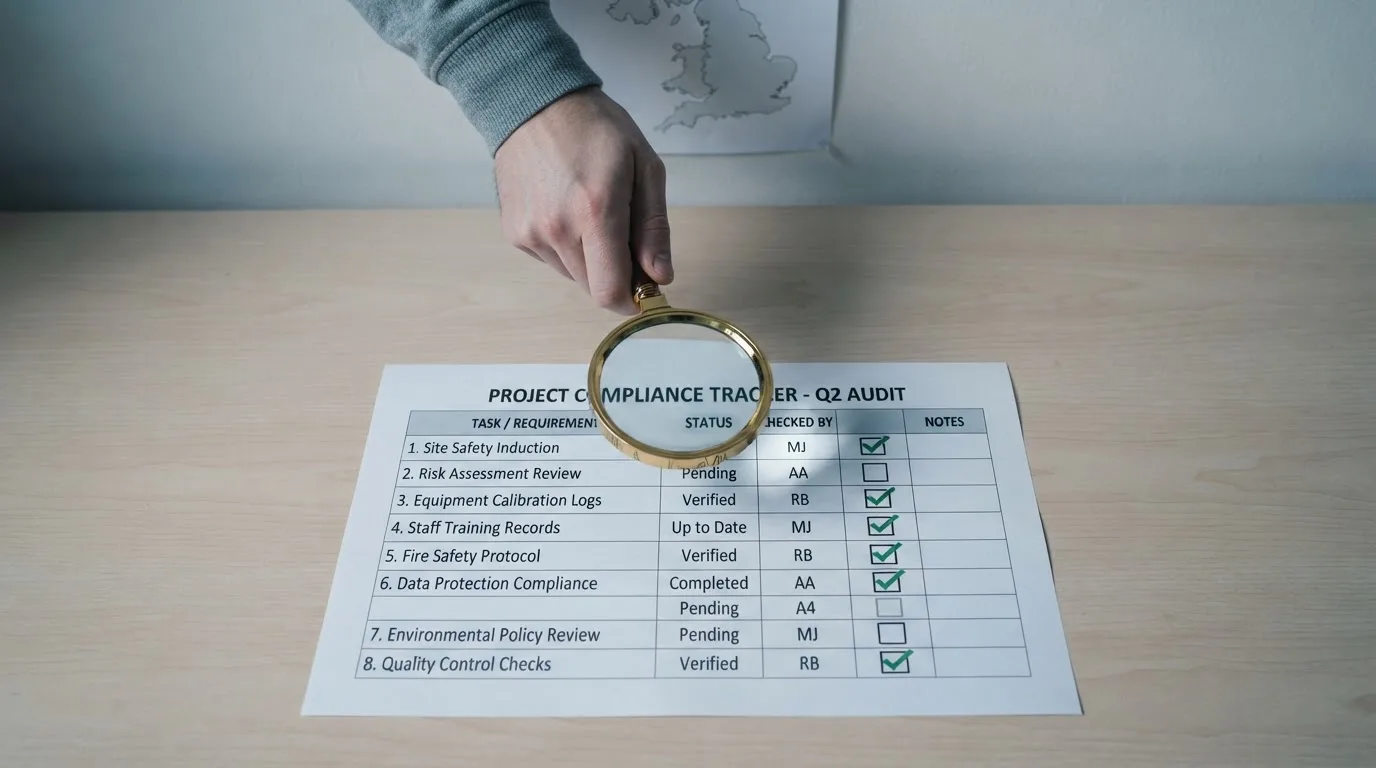
The register is the test. The Commission’s public register lists every business holding an active operating licence, and on 18 September 2026 it recorded 139 businesses holding an active remote casino operating licence; the register can be searched online and downloaded in full as CSV or Excel files. The same date, the register’s domain list held 1065 active and 361 white-label website entries; a white-label site trades under another company’s licence, so a Virgin Games customer, for example, is a Gamesys Operations Limited customer under licence 038905-R-319430-022 — the brand and the licence holder are not always the same entity.
A remote casino licence number on the register has the form account-number-R-licence-number-suffix, where the leading six digits repeat the licence holder’s account number and the “R” marks a remote (online) licence. Bet365’s domain Bet365.com is listed on the register as an active domain of account 55149, Hillside (UK Gaming) ENC, which holds the active remote casino operating licence 055149-R-331499-004. The same account-and-domain format applies to every operator featured later in this guide.
Minimum age is 18. Name, address and date of birth are verified before the first deposit or any play — a rule in force since 7 May 2019. Anonymous play is not possible at a licensed site, and a phone-credit deposit does not relax this: the casino has to know who is paying before the cashier will accept a deposit of any kind. The verification can be SMS-based — the same channel as the deposit itself — but it still happens.
What the licence forces the casino to do — and what it costs a player
The licence carries a stack of player-protection rules that bind every operator on the register. Three of them shape the phone-credit experience directly.
Online slots carry a maximum stake per game cycle. The stake is £5 for players aged 25 and over, in force from 9 April 2025, and £2 for players aged 18 to 24, in force from 21 May 2025. A “game cycle” is the unit the Commission’s Remote Technical Standards measure: every spin, every bonus round, every gamble feature counts toward the cycle, and the stake cap applies to the total wagered across it. The cap is per game, not per session; a player can still lose a session’s worth of small bets in sequence.
There is no state-set deposit or loss ceiling. Operators must prompt a customer to set a financial limit before the first deposit — a rule in force from 31 October 2025. A phone-credit deposit counts as a first deposit for this purpose if it is the player’s first deposit with the operator, so the limit-setting prompt fires before the cashier accepts the SMS authorisation.
Since 31 October 2021, auto-play is banned at UK-licensed casinos. A slot spin may not be faster than 2.5 seconds, and losses disguised as wins — slot results that show a smaller payout than the stake with celebratory graphics and sound — are banned.
GAMSTOP is the national online self-exclusion scheme and is a mandatory condition of every online licence since 31 March 2020. Self-exclusion periods are six months, one year or five years, and cannot be cancelled early. Every GB-licensed online operator must take part, so a player who has registered with GAMSTOP cannot deposit at any of the ten operators featured in this guide — by phone credit or any other route.
Financial vulnerability checks run at £150 net deposits in a rolling 30 days, in force from 28 February 2025; the checks use public data only and the wider financial risk assessments are announced but not yet in force. A player who keeps their phone-credit deposits under £150 a month — the typical ceiling set by the intermediary anyway — sits below the trigger. A player who stacks phone-credit deposits on top of card deposits to push past the trigger will see the check fire.
Wagering requirements are capped at 10x since 19 December 2025, and mixed-product bonuses — for example, a sports bet that pays out as casino spins — are banned. The 10x cap is a multiple of the bonus amount (or the deposit plus bonus, where the terms make the bonus non-withdrawable) and the bonus cannot ask the player to turn it over more than ten times before withdrawal. This is the number to watch on any offer a phone-credit casino promotes.
Credit cards are banned for gambling since 14 April 2020, including credit cards routed through e-wallets. A phone-credit deposit does not breach this rule on its face — it is billed to a phone account, not a credit card — but the rule means a player who tries to fund a phone bill on credit is outside the licence’s protection.
Player protection extends to dispute resolution. The Commission’s approved ADR (alternative dispute resolution) route is available to a player at any licensed operator; an offshore site offers none. National Gambling Helpline (GamCare) and GambleAware are the support services the licence regime points players to.
What paying by phone credit looks like in practice
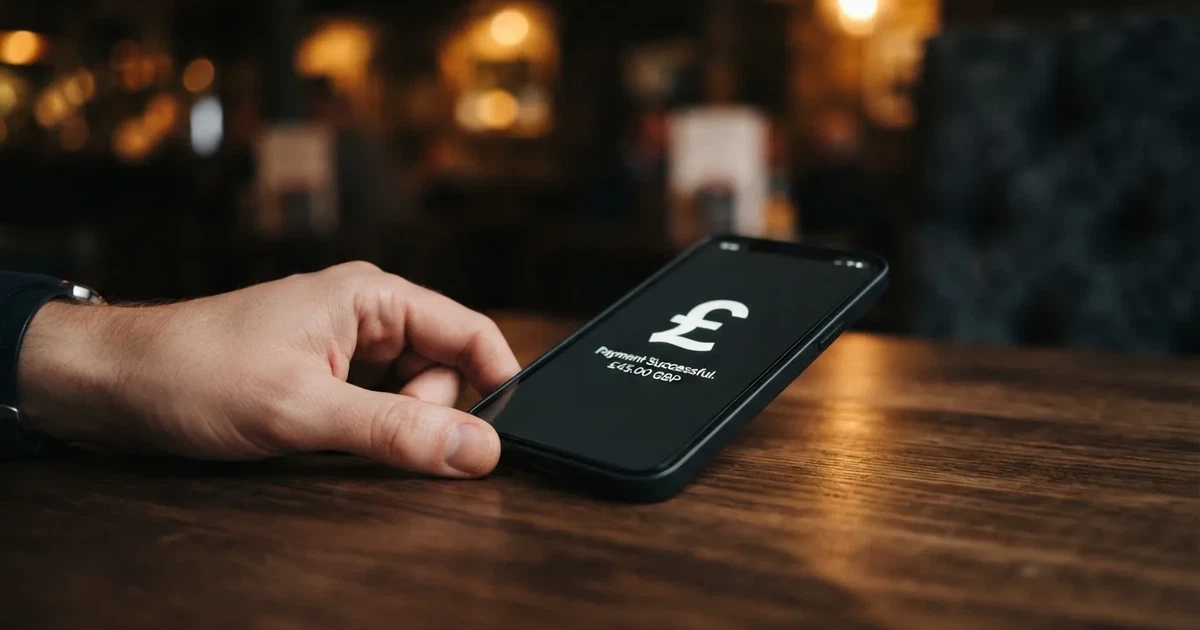
The deposit clears fast. Payforit and Boku both return the SMS confirmation within seconds, and the casino credits the account on receipt. A player who deposits £10 by phone credit sees £10 in the casino balance in the time it takes to reply to a text — there is no bank clearing window, no 3-D Secure step, no card-present delay.
The withdrawal is a different matter. A phone-credit deposit cannot be withdrawn back to a phone bill; the casino pays out by bank transfer or, where supported, to an e-wallet, and the timing depends on the casino’s internal processing and the player’s completion of the source-of-funds check that the licence obliges it to run on the first withdrawal. A first withdrawal at a new operator can take several working days even at a fast-paying brand; subsequent withdrawals are usually quicker, but the casino has the right to ask for further documents at any time.
There is no chargeback on a phone-credit deposit. A card payment can be reversed through the card issuer in disputed circumstances; a phone-billed transaction cannot. The casino’s own complaints procedure is the only route, and a player who is unhappy with the outcome can take the case to the Commission’s approved ADR or, in the last resort, raise it with the Commission directly.
A phone-credit deposit is therefore best understood as a fast, small, irreversible top-up. It is well suited to a player who wants to try a new slot at a new operator with a small stake; it is poorly suited to a player who wants to move a large bankroll in one step.
Who accepts the route — and what the register shows
The Gambling Commission register lists 139 businesses holding an active remote casino operating licence as of 18 September 2026, with 1065 active and 361 white-label website entries on the same date. The ten operators below are taken from that register. Each is listed as an active or white-label domain against the licence account that runs it; the licence numbers are reproduced exactly as the register publishes them.
The register does not record which operators accept pay-by-phone-credit deposits. That detail is set by each operator’s own cashier, and the Commission’s domain list is silent on it. A player who wants to confirm the route is available before registering would have to open an account and reach the deposit screen — or check the operator’s own payments page, which may or may not list it. The table below records what the register does say.
| Brand | Licence holder | GB remote casino licence | Domain status on the register | Subject support |
|---|---|---|---|---|
| bet365 | Hillside (UK Gaming) ENC | 055149-R-331499-004 | Active | — |
| Betfred | Petfre (Gibraltar) Limited | 039544-R-319290-010 | Active | — |
| PokerStars | Stars Interactive Limited | 039108-R-319334-026 | Active | — |
| 32Red | Platinum Gaming Limited | 045322-R-324275-019 | Active | — |
| Virgin Games | Gamesys Operations Limited | 038905-R-319430-022 | White Label | — |
| William Hill | WHG (International) Limited | 039225-R-319373-015 | Active | — |
| Midnite | Dribble Media Limited | 042647-R-321653-022 | Active | — |
| Grosvenor Casinos | Rank Interactive (Gibraltar) Limited | 057924-R-334666-005 | Active | — |
| 888casino | 888 UK Limited | 039028-R-319297-014 | Active | — |
| kwiff | Eaton Gate Gaming Limited | 044448-R-323408-017 | Active | — |
Several of these brands share a single licence holder. Ladbrokes, Coral and Gala Bingo all sit under LC International Limited, and the same pattern of shared licences is visible elsewhere on the register; a player who holds an account with one of them already holds an account at the others, with all the safer-gambling settings that implies. Two of the brands above — Virgin Games and the white-label sites clustered under Gamesys Operations Limited — are white-label domains that trade under another operator’s licence rather than holding one of their own. The status matters because the licence holder, not the brand, is the entity the Commission regulates.
The table leaves the subject column blank because the register carries no figure on which of these operators accept phone-credit deposits, and no research data on that point was returned to confirm or deny it. A player comparing these ten on the phone-credit question alone has to check each cashier directly.
What the comparison actually tells a player
The licence number is the easiest fact to verify: the register lists every active remote casino licence with its full number, and a player can paste a number into the Commission’s public search to confirm it is active and belongs to the named licence holder. The white-label distinction matters because the entity that holds the licence is the entity the Commission can discipline; a white-label brand is one step removed.
The ages of the operators vary widely. Bet365’s licence has been live across multiple renewals; newer entrants like Midnite and kwiff sit on licences issued in the past few years. The licence does not expire on a fixed schedule — the Commission renews operating licences on a multi-year cycle — but the licence number’s suffix increments with each renewal, so a higher suffix generally means a longer-standing licence. A player who wants a sense of how long a brand has been regulated can read the suffix as a rough proxy.
The register does not capture product features, payout speed, slot catalogue size, customer support hours, or any of the other things a player actually compares casinos on. The licence tells a player that an operator is legal and is bound by the safer-gambling rules above; it does not tell a player which operator will pay out fastest or stock a particular slot. Those comparisons sit outside the register.
The wagering cap and what it means for a phone-credit deposit
Since 19 December 2025, wagering requirements on any bonus at a UK-licensed casino are capped at 10x. This is the number to watch on any offer that a phone-credit deposit unlocks — and because phone-credit deposits are typically small and frequent, an offer that triggers on the first deposit is more likely to bind a phone-credit user than a player depositing by bank transfer.
The arithmetic is straightforward. A bonus of £10 carries a maximum required turnover of £100 at the 10x cap. A bonus of £50 carries a maximum required turnover of £500. A bonus of £100 carries a maximum required turnover of £1,000. The bonus cannot ask for more turnover than this; any terms that push past 10x are a breach of the licence condition and the Commission can be told.
The clearing cost is the figure a player should think about. Required turnover divides by stake-per-spin to give the number of spins the bonus demands; at a £2 stake — the cap for 18-24 — a £10 bonus with 10x wagering demands £100 turnover, which is 50 spins. At a £5 stake — the cap for 25 and over — the same bonus demands 20 spins. The slot’s RTP — return to player, the percentage of stake a slot returns over a long run — sits at the figures published by the game studio; an expected loss on those spins is turnover multiplied by one minus RTP, so a 96% RTP slot on £100 turnover produces an expected loss of £4 across the bonus clearing, before the bonus itself is taken into account. This is statistical, not a guaranteed outcome for any single spin.
Where the offer carries a maximum cashout cap — a rule that limits how much of a bonus’s winnings can be withdrawn — the player’s expected return changes. The 10x cap is on turnover; a separate cap on cashout is allowed. A player reading bonus terms should look for both.
Apple Pay and the wider wallet picture
Apple Pay is the wallet most often confused with phone-credit billing, but they are not the same. Apple Pay is developed and operated by Apple Inc. and launched on 20 October 2014, initially supporting only US-issued payment cards; UK-issued card support began on 14 July 2015. Apple Pay protects card data through tokenization, replacing the actual card number with a device-specific tokenised Device Primary Account Number and generating a dynamic security code for each transaction, and Apple Pay in-store payments use near-field communication (NFC) to communicate wirelessly with contactless payment terminals. Apple states that a supported card from a participating card issuer is required to use Apple Pay, and that Apple Pay is not available in all markets.
The distinction matters because Apple Pay is funded by a debit or credit card, and the credit-card ban since 14 April 2020 catches Apple Pay when it is funded by a credit card. A phone-credit deposit is funded by a phone bill or pay-as-you-go credit and is not subject to the same rule; the casino’s cashier treats the two as different payment methods. A player who wants to use Apple Pay for casino deposits needs a debit card on file; a player who wants to use phone credit needs a mobile phone on a contract or pay-as-you-go plan.
On an iPhone with Face ID, Apple Pay in-store purchases are authenticated by double-clicking the side button; on models with Touch ID, by double-clicking the Home button. The gesture is different from a phone-credit deposit, which is authenticated by SMS reply on the same handset. The two flows meet at the casino cashier; they do not meet inside the phone.
The US Consumer Financial Protection Bureau finalised a rule in November 2024 bringing large nonbank digital wallet operators, including Apple Pay, under bank-like federal oversight, and the European Commission opened an investigation in 2020 into whether Apple abused its control of iPhone NFC hardware to block rival payment apps’ access to contactless payments, in relation to Apple Pay. Neither action changes the UK position; both are signals about the wider scrutiny wallets face.
AstroPay and the wider e-money picture
AstroPay, founded in 2009 and headquartered in Uruguay, operates as a global digital wallet offering online payments, virtual and physical debit cards, and peer-to-peer transfers; AstroPay spun off its payment-processing business, dLocal, as a separate company in 2016. AstroPay’s UK entity, Larstal Limited, is an electronic money institution authorised by the Financial Conduct Authority under the Electronic Money Regulations 2011; AstroPay’s Isle of Man entity, AstroPay Global (IOM) Limited, is licensed by the Isle of Man Financial Services Authority for money transmission; AstroPay’s Brazilian entity, Astro Instituição de Pagamento Ltda, is authorised by the Brazilian Central Bank as an electronic currency issuer. The regulatory footprint is wider than a phone-credit deposit’s, because AstroPay holds e-money licences in several jurisdictions rather than relying on a single carrier billing arrangement.
AstroPay is not a phone-credit deposit. It is a wallet that a player can fund from a bank account or card and use at the casino cashier; the casino treats it as an e-wallet deposit. The credit-card ban applies if the funding card is a credit card. The 10x wagering cap applies to any bonus the deposit unlocks. The player’s safer-gambling protections — GAMSTOP, the financial vulnerability check, the deposit-limit prompt — are unchanged.
A player comparing payment routes at a UK mobile casino in practice sees three families: card deposits (debit only, since the credit-card ban), e-wallet deposits (PayPal, Skrill, Neteller, AstroPay, Apple Pay where supported), and phone-credit deposits (Payforit, Boku and similar carrier-billing routes). The first two routes support larger deposits and faster withdrawals; the third supports smaller, faster deposits with no withdrawal route at all.
How a phone-credit deposit compares to a card deposit
A card deposit at a UK-licensed casino is authenticated through 3-D Secure, settles through the card network, and can be reversed through a chargeback in disputed circumstances. A phone-credit deposit is authenticated through SMS, settles through the carrier billing intermediary, and cannot be reversed. The deposit cap on a phone route is set by the intermediary; the deposit cap on a card route is set by the operator and the card issuer, and is typically much higher.
The processing times differ. A card deposit settles in seconds; a phone-credit deposit settles in seconds. A card withdrawal takes one to several working days depending on the operator; a phone-credit withdrawal is not possible at all — the player must withdraw to a bank account or e-wallet, which takes the same time as any other withdrawal at that operator.
The safer-gambling protections are the same on both routes. GAMSTOP applies; the financial vulnerability check at £150 net deposits in a rolling 30 days applies; the deposit-limit prompt before the first deposit applies. The route does not exempt the player from the framework; the framework applies to the player, regardless of the route.
A player who plans to deposit by phone credit and withdraw by bank transfer is using two payment systems at once, with the slower one determining how quickly winnings reach the player’s pocket. The route choice at the cashier is therefore less about speed than about how the player wants to fund the session.
Who each operator suits — and where the comparison lands
Bet365, Hillside (UK Gaming) ENC, licence 055149-R-331499-004, is the largest of the ten by most measures a player would use — and the register confirms the licence and active domain status. The brand is a generic fit: a player who values catalogue depth and brand recognition will find it at bet365.
Betfred, Petfre (Gibraltar) Limited, licence 039544-R-319290-010, sits as an active domain on the same register. The Gibraltar-incorporated licence holder is the entity the Commission regulates; the brand is a UK-facing retail and online bookmaker with a casino product.
PokerStars, Stars Interactive Limited, licence 039108-R-319334-026, is the largest of the ten by poker traffic and carries a casino product alongside. A player who came for poker and stays for casino will find both on the same licence.
32Red, Platinum Gaming Limited, licence 045322-R-324275-019, has a long-standing casino brand and sits as an active domain on the register. The brand is one of the older casino-first operations in the UK.
Virgin Games, Gamesys Operations Limited, licence 038905-R-319430-022, is a white-label domain — a player signing up at Virgin Games is signing up under Gamesys Operations Limited’s licence, the same licence that covers other Gamesys-branded or Gamesys-powered sites. The white-label status is the main point of difference here.
William Hill, WHG (International) Limited, licence 039225-R-319373-015, is one of the longest-standing UK bookmakers and carries a casino product alongside sports. The licence holder is the regulated entity; the brand is the public face.
Midnite, Dribble Media Limited, licence 042647-R-321653-022, is a newer entrant by licence age — the licence was issued in the past few years — and positions itself as a mobile-first brand. A player who wants a more recent product will land here.
Grosvenor Casinos, Rank Interactive (Gibraltar) Limited, licence 057924-R-334666-005, sits as an active domain and has a retail casino chain behind the online brand. The land-based presence is what makes it different from the others.
888casino, 888 UK Limited, licence 039028-R-319297-014, has one of the longer-standing casino brands in the UK and a wide slot catalogue. The licence holder is the regulated entity.
kwiff, Eaton Gate Gaming Limited, licence 044448-R-323408-017, is the newest of the ten by brand age — the brand launched in the past few years — and positions itself around a “kwiffed” mechanic that randomly boosts payouts. The licence is active and the domain is active; the brand is the difference.
The register confirms every brand’s licence status. It does not confirm which of them accepts phone-credit deposits, which pays out fastest, or which has the best slot catalogue. Those are operator-level decisions, not licence-level ones, and a player comparing them on payment method alone has to check each cashier.
What a player comparing these ten should actually do
The licence check is the first step. The Commission’s public register is the only place to confirm that a brand holds an active remote casino operating licence, and the ten above are listed there on the dates given. The register is searchable online and downloadable in CSV or Excel.
The deposit-route check is the second step. The register does not record which operators accept phone-credit deposits; the cashier does. A player who wants to confirm the route before registering will find the answer on the deposit screen after sign-up — which means a name, address and date of birth, a verification step, and the deposit-limit prompt that the licence requires before the first deposit.
The safer-gambling framework is in place regardless of the operator. GAMSTOP, the financial vulnerability check, the deposit-limit prompt, the 10x wagering cap, the £2 and £5 stake caps, the auto-play ban, the loss-disguised-as-win ban — these all apply. A player who has self-excluded cannot deposit anywhere on the list; a player who has set a deposit limit will be prompted to set one again at a new operator if the limit-setting prompt is required.
The route choice is the last step. A player who wants speed and small deposits will pick phone credit; a player who wants large deposits and a withdrawal route will pick a card or e-wallet. The two are not exclusive — most licensed operators support several routes at once — but the route shapes the session.
Offshore sites and what a player gives up by going there
The Commission’s enforcement powers against offshore sites that take UK customers are real but limited. The Commission disrupts illegal sites — cease-and-desist notices, search-engine delisting, payment and hosting referrals — but has no ISP-blocking power. No penalty is aimed at the player; the player does not commit an offence by depositing at an unlicensed site. What the player gives up is protection.
No GAMSTOP at an unlicensed site — the self-exclusion is enforced at the licensed sites only. No Commission’s approved ADR route for disputes. No ID-verification guarantee, so the site can pay out without checking source of funds and the player has no recourse if it does not. No 10x wagering cap — the bonus terms can ask for whatever turnover the site wants. No stake cap on slots — a player can lose a session’s bankroll on a single spin. No financial vulnerability check. No deposit-limit prompt.
The credit-card ban still applies at the player side: a UK player funding an offshore account with a credit card is committing a card-issuer breach even though the casino may accept the card. A debit card is the typical route at an offshore site, with the chargeback as the only meaningful protection — and even that route narrows once the operator is offshore.
A player who has tried a phone-credit deposit at a licensed site and been put off by the small deposit cap should not assume an offshore site offers a higher cap with the same speed. Offshore carrier billing exists but is not subject to UK rules, and the player’s recourse if the deposit goes wrong is much weaker.
The tax picture
Players pay no tax on gambling winnings in the UK. The tax falls on the operator: Remote Gaming Duty, raised from 21% to 40% from 1 April 2026. The rate change is a model only — a player who wants the current rate should check with HMRC. A player comparing licensed operators does not need to factor duty into the comparison; the duty is the operator’s cost, and the operator has already priced it in.
The same is not true for operators. A 40% duty rate shapes what an operator can afford to offer in bonus terms, which is part of why the 10x wagering cap matters: it sets a ceiling that limits how generous an offer can be, on top of the duty that limits how generous the operator can afford to be. A player who reads bonus terms should know that the 10x cap is a hard ceiling — the operator cannot offer more without breaching the licence condition.
Putting the choice together
The shortest version of the choice is this. A phone-credit deposit is a fast, small, irreversible top-up, and a player who values that combination has to find a UK-licensed operator that accepts the route at the cashier. The licence register confirms that ten major operators are licensed and active on the dates given; the cashier confirms the route. The safer-gambling framework applies regardless of the route, and the route choice does not exempt the player from GAMSTOP, the deposit-limit prompt, the financial vulnerability check, or the 10x wagering cap.
A player who wants the largest catalogue and a long-standing brand has the most options. A player who wants a mobile-first product has fewer but they exist. A player who wants a white-label brand is registering under another operator’s licence and should know that. A player who has self-excluded via GAMSTOP cannot deposit at any of the ten on the list — and that is the framework’s design, not a flaw.
The register is the floor. The cashier is the test. The framework is the same on every route.
Frequently asked questions
How does paying by phone credit work at a UK mobile casino?
The casino routes the deposit through a UK mobile-billing intermediary such as Payforit or Boku, which bills the amount to the player’s phone bill or pay-as-you-go credit. The player confirms the deposit by replying to an SMS, and the casino credits the account on receipt.
Is a pay-by-phone-credit deposit added straight to a phone bill?
Yes. The intermediary — typically Payforit or Boku — adds the deposit amount to the player’s monthly phone bill or deducts it from pay-as-you-go credit. The casino does not see the mobile number; the intermediary holds the relationship with the carrier.
Do UK-licensed casinos still run ID checks before a phone-credit deposit?
Yes. Name, address and date of birth are verified before the first deposit or any play, in force since 7 May 2019. The verification may use the same SMS channel as the deposit but it is a separate step, and a phone-credit deposit does not exempt the player from the check.
Is there usually a limit on how much can be deposited by phone credit?
Yes. UK mobile-billing intermediaries typically cap a single phone-credit deposit well below the £150 mark that the Gambling Commission’s financial vulnerability check watches. The cap is set by the intermediary and the operator together, not by the Commission, but it has the same practical effect.
How quickly does a phone-credit deposit reach a casino account?
Within seconds. The intermediary returns the SMS confirmation quickly and the casino credits the account on receipt. There is no bank clearing window, no 3-D Secure step, and no card-present delay.
Can phone-credit deposits be reversed if made by mistake?
No. A phone-billed transaction cannot be reversed through the carrier in the way a card payment can be reversed through the card issuer. The casino’s own complaints procedure is the only recourse, with the Commission’s approved ADR as the next step if that fails.
Published by the signupbonuscheck team.