
Two Hundred Free Spins Without a Deposit: What a UK Player Actually Gets
Current as of 24 September 2026 against the Gambling Commission’s public register of remote casino operating licences.
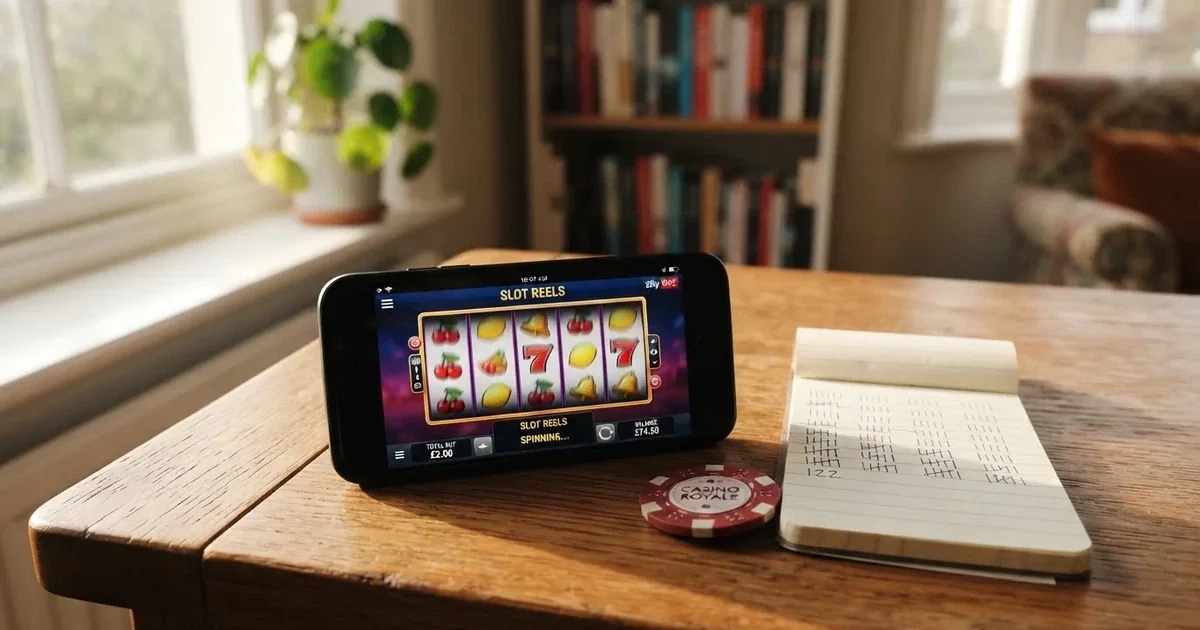
The headline number sells the offer. Two hundred free spins, no money down, no card needed at the door. The fine print is what the player lives with afterwards, and in the UK that fine print has been tightened in a way most marketing pages prefer not to dwell on. Since 19 December 2025, wagering requirements on casino bonuses are capped at 10x the bonus amount. Mixed-product deals, where a sports bet triggers casino spins, are no longer permitted. The result is a market where the “200 free spins, no deposit” pitch still exists, but where what sits behind it is more uniform, and less generous, than the headline suggests.
This page lays that market out. The first half covers the rule book that governs any such offer in Great Britain — who is allowed to run one, what the player-protection framework looks like, and how the money moves when a win is finally withdrawn. The second half ranks ten Gambling Commission-licensed operators side by side on the specifications a reader comparing them can actually verify on the public register. Nothing on the page recommends a casino to claim at; the comparison is the reader’s, and the choice is theirs.
Table of Contents
- How a No-Deposit Free Spins Offer Works in the UK
- The Gambling Commission and What a UK Licence Actually Covers
- Stake Limits, Bonus Caps and the Wider Rule Book
- Responsible Gambling Tools That Apply to a No-Deposit Offer
- Payments and the Cashout Side of the Offer
- The 200-Free-Spins Market in the UK
- Top 10 UK-Licensed Operators for No-Deposit Free Spins Offers
- How a Reader Should Compare the Ten
- Reading the Public Register Yourself
- Frequently Asked Questions
How a No-Deposit Free Spins Offer Works in the UK
A no-deposit free spins offer credits a set number of slot spins to a player’s account without requiring a deposit first. The spins are usually locked to a single title, run at a fixed coin value, and expire within a short window. Whatever they pay out is bonus money, not cash, and is held against a wagering requirement before any of it can be withdrawn.

That is the standard shape. The UK version of it has three features that distinguish it from the same offer in less regulated markets.
The first is licensing. A casino offering free spins with no deposit to a player in Great Britain must hold a Gambling Commission remote operating licence — no Curaçao, Maltese or Gibraltar licence stands in for it. The Commission’s public register is the test of whether a brand qualifies, and a brand that fails that test is operating illegally regardless of what its footer says.
The second is identity. Name, address and date of birth must be verified before the first deposit or any play, and have been since 7 May 2019. There is no anonymous trial of a slot, even one the casino funds. The verification gate is what the player’s first session will hit, and it is the same gate the credit-card ban, the GAMSTOP self-exclusion check, and the financial-vulnerability prompt all sit behind.
The third is the bonus cap itself. Since 19 December 2025 the maximum wagering requirement any casino bonus can carry is 10x the bonus amount. Mixed-product bonuses — a sports bet that unlocks casino credit, or a casino deposit that unlocks a free bet — are prohibited. The cap applies to the wagering on the bonus, not to the spin value or to the maximum win; those are set by the casino’s own terms within the wider rule book.
The net effect is that a 200-free-spin no-deposit offer in the UK is now closer to a regulated utility than to a marketing stunt. The casino can still choose the spin value, the eligible title, the expiry window, and the maximum cashout. It cannot, however, demand more than 10x playthrough on whatever those spins produce, and it cannot dress a sportsbook credit as a casino promotion.
What the offer is, and what it is not
The 200 in “200 free spins” is a count, not a value. Two hundred spins at 10p each is £20 of bonus turnover; two hundred at 20p is £40. Both can be advertised under the same headline. The reader comparing offers needs to read past the count to the per-spin stake, the eligible slot, and the time limit.

The no deposit in “no deposit” is literal at the point of registration. It does not mean no conditions later. The player will still need to complete identity verification before any withdrawal, and the winnings from the spins will sit behind a wagering requirement — capped at 10x, but real — before they convert to withdrawable cash.
A no-deposit offer also does not exempt a player from GAMSTOP. A self-excluded account cannot be reopened to claim one, and a casino that processes a self-excluded player’s spin is in breach of its licence. The offer sits inside the same protection regime as any other bet on the site.
What the player’s first session looks like
Sign-up. The casino runs an automated check against GAMSTOP. If the player is not on the register, account creation proceeds. The casino then runs the identity verification — name, address, date of birth, typically against a credit-reference agency or a document upload.
The 200 free spins credit automatically once verification clears, or sometimes before verification for the spins alone, with the cashout gated on the verification finishing. The player opens the named slot and runs through the spins at the stake the casino has fixed.
What lands in the bonus balance at the end is whatever the slot paid out across the 200 spins, net of any per-spin stake that the slot itself absorbed. That balance is bonus money. It must be wagered — at 10x or less, under the December 2025 cap — before it becomes withdrawable cash.
Wagering means playing through the bonus balance on eligible games. Slots contribute 100% by default; table games usually contribute far less, sometimes 0%. A £20 bonus at 10x means £200 of qualifying play before the cashout unlocks.
When the wagering is complete, the bonus balance converts to cash. The player then requests a withdrawal. Payment-method choice, processing windows and any operator-side affordability checks sit between request and arrival.
The Gambling Commission and What a UK Licence Actually Covers
The Gambling Commission is the regulator for gambling in Great Britain — England, Scotland and Wales, but not Northern Ireland. It operates under the Gambling Act 2005 and is sponsored by the Department for Culture, Media and Sport. Since the Gambling (Licensing and Advertising) Act 2014, any operator taking customers in Great Britain needs a Commission licence regardless of where the operator itself is based. A licence issued in another jurisdiction does not extend to UK players.
The Commission’s public register is the source of truth on who holds what. It is searchable online and downloadable as CSV or Excel files. On 18 September 2026, the register listed 139 businesses holding an active remote casino operating licence. That number is small because each business can be a large operator with many brands underneath it — LC International Limited, for instance, runs Ladbrokes, Coral and Gala Bingo under the same licence.
The register’s domain list is the matching companion. Each website a Commission-licensed business runs is recorded against the licence account that operates it, with a status of Active, Inactive or White Label. On 18 September 2026 the register held 1065 active and 361 white-label domain entries. A white-label site trades under another company’s licence — Virgin Games, for example, is a Gamesys Operations Limited white-label, not a standalone licensee.
The licence number itself follows a fixed form: account number, the letter R for remote, a six-digit identifier, and a suffix. So 038905-R-319430-022 is Gamesys Operations Limited’s remote casino operating licence, and the leading 038905 is Gamesys’s account number on the register. A reader can paste that string into the Commission’s search and see the licence in full.
What the licence permits
A remote casino operating licence covers the running of casino games — slots, table games, live dealer — to players via a website or app. It does not, on its own, cover sports betting, pool betting or lotteries; each of those carries its own licence type. Several of the operators in the ranking below hold multiple Commission licences, one per product vertical.
The licence is conditional. The licensee must comply with the Licence Conditions and Codes of Practice (LCCP), the social responsibility code, and the Remote Technical Standards. Breaches are investigated; sanctions range from warnings through financial penalties to licence suspension or revocation. The Commission’s enforcement record is published.
What the licence does not do
A Commission licence is not a guarantee of solvency. The Commission does not insure player balances against operator insolvency, and segregated player-funds rules — though they exist — do not give the player the protection a bank account does. A reader who cares about that side of the risk needs to look at the operator’s own status, not at its licence.
The licence also does not replace the player’s own judgement on the offer itself. The Commission caps wagering requirements and bans mixed-product bonuses; it does not pick which slot the spins run on, what the per-spin stake is, how long the spins last, or what the maximum cashout is. Those remain the operator’s call.
Stake Limits, Bonus Caps and the Wider Rule Book
The rule book surrounding a no-deposit free spins offer in the UK is dense, and a few of its rules bite the offer directly.
Stake limits on slots. Since 9 April 2025 the maximum stake per game cycle on online slots is £5 for players aged 25 and over. For players aged 18 to 24 the limit is £2, in force since 21 May 2025. The stake limit applies to the player’s own funds; a no-deposit spin at 10p or 20p sits well inside both tiers. The limit matters more for the wagering that follows the spins, when the player is playing with bonus money.
Bonus wagering cap. Since 19 December 2025, wagering requirements on casino bonuses are capped at 10x the bonus amount. The cap applies to the bonus, not to a deposit-plus-bonus combined figure. So a £20 no-deposit bonus carries at most £200 of wagering; a £100 deposit bonus carries at most £1,000.
Mixed-product ban. Also since 19 December 2025, bonuses that combine gambling products are prohibited. A sportsbook free bet that unlocks casino spins, or a casino deposit that unlocks a free bet, is not a permitted structure. The 200-free-spin offer is single-product by design, which is why the ban changes little about the headline shape of it.
Credit-card ban. Since 14 April 2020, credit cards cannot be used to fund gambling in Great Britain — online or offline, direct or via an e-wallet. Debit cards and bank transfers are unaffected. A no-deposit offer does not need a deposit method at the door, but it will need one at cashout, and that method cannot be a credit card.
Auto-play ban. Since 31 October 2021, auto-play on slots is banned, and each spin must take at least 2.5 seconds. The 200 spins a no-deposit offer credits cannot be played on fast-forward; at the regulatory floor, that is at least 500 seconds, or a little over eight minutes, of slot time. In practice, sessions run longer.
Win-presented-as-loss ban. Also since 31 October 2021, slot games must not display a “win” when the spin results in a net loss. The presentation rule does not change what the spins pay, but it changes how the game signals success.
Identity verification. Since 7 May 2019, name, address and date of birth must be verified before the first deposit or any play. The verification is run by the operator, typically against a credit-reference agency or document upload. The player cannot withdraw any winnings until verification clears.
Affordability prompts. Operators must prompt a customer to set a financial limit before the first deposit, a rule in force since 31 October 2025. Financial vulnerability checks — light-touch, using public data only — run at £150 net deposits in a rolling 30-day window, from 28 February 2025. The deeper financial risk assessments have been announced but are not yet in force.
What the player cannot do
A no-deposit offer cannot be claimed twice from the same household or IP, and operators share exclusion lists. The offer cannot be combined with another promotion unless the casino’s terms explicitly allow it — and since the December 2025 mixed-product ban, that combination is harder to find. The spins cannot be transferred between titles unless the casino’s terms say so. And the winnings cannot be withdrawn as cash until the wagering requirement — at most 10x the bonus — has been met.
The player’s recourse, if a casino breaches its own terms or its licence conditions, runs through the casino’s internal complaint process first, then to an Alternative Dispute Resolution (ADR) provider approved by the Commission. The Commission’s published list of approved ADRs is the route for disputes that the operator does not resolve.
Responsible Gambling Tools That Apply to a No-Deposit Offer
A no-deposit offer sits inside the same safer-gambling framework as any other bet the casino takes. The tools are not optional, and the player-protection regime applies regardless of whether the player’s stake is their own money or the casino’s.
GAMSTOP
GAMSTOP is the national online self-exclusion scheme. Every Gambling Commission-licensed online operator must take part in it. A player who registers with GAMSTOP cannot open a new account at any participating site for the period they choose — six months, one year or five years — and cannot shorten the period once chosen.
The check runs at registration, before the first deposit and before any play. A player who has self-excluded cannot claim a 200-free-spin no-deposit offer; the casino’s automated check returns the GAMSTOP record and blocks the account. A casino that processes a self-excluded player’s spin is in breach of its licence, and the player who attempts to circumvent GAMSTOP by giving false details is in breach of the self-exclusion agreement.
Deposit limits and time-outs
The casino must offer the player the ability to set a deposit limit before the first deposit, and it must prompt them to do so. The player can also set a session time limit, a loss limit, or a reality-check interval — a pop-up that tells them how long they have been playing. Time-outs — short self-exclusion periods from 24 hours to six weeks — are available on top of GAMSTOP and apply to the single operator only.
Reality checks
A reality check is a pop-up that interrupts play and tells the player how long the session has lasted and what the net position is. The operator chooses the interval; the player can shorten it or turn reality checks off only within limits set by the licence conditions. A long session of bonus wagering on a 200-free-spin offer will trigger reality checks at the operator’s chosen cadence.
Affordability and vulnerability
The Commission’s light-touch financial vulnerability check — using public data, run at £150 of net deposits in a rolling 30-day period — is the front line of the affordability regime. The wider financial risk assessments, announced but not yet in force, will deepen that regime. For a no-deposit offer, the affordability rules bite at cashout rather than at the spins themselves, but the underlying check is the same one the player will face across their time on the site.
Help and support
The National Gambling Helpline, run by GamCare, is the main point of contact for players who feel their gambling is becoming a problem. GambleAware funds research, treatment and public education. Both are listed in every licensed casino’s responsible-gambling section. The Commission itself does not run a treatment service but does publish the list of approved ADRs and the register of operators, both of which a player in difficulty can use to verify who they are dealing with.
Payments and the Cashout Side of the Offer
A no-deposit free spins offer does not need a deposit at the front door. It absolutely needs a withdrawal method at the back door, because whatever the spins produce has to be moved from bonus balance to a real account somewhere.
Withdrawal routes
The standard UK withdrawal routes are debit card, bank transfer and a short list of e-wallets. PayPal is accepted at the majority of Commission-licensed sites. Skrill, Neteller and similar are accepted at some but not all; some casinos exclude e-wallet deposits from bonus eligibility, and the player’s first deposit — if they make one — may need to be via debit card before e-wallet withdrawals unlock.
Apple Pay is accepted for deposits at a growing number of Commission-licensed sites, but the cashout side is a different question. Apple Pay was developed and operated by Apple Inc., launched on 20 October 2014 and began supporting UK-issued payment cards on 14 July 2015. The wallet protects card data through tokenisation — the actual card number is replaced with a device-specific tokenised Device Primary Account Number, and each transaction carries a dynamic security code. In-store payments use near-field communication; in-app and online payments authenticate differently — on a Face ID iPhone by double-clicking the side button, on a Touch ID model by double-clicking the Home button. For the casino withdrawal flow specifically, Apple Pay is more often a deposit rail than a payout rail. Where it is offered as a payout, the funds land on the card behind the wallet.
Bank transfer withdrawals typically clear through the Faster Payments Service, which has been live since 2008 and is operated by Pay.UK. Faster Payments runs 24 hours a day, seven days a week; most payments arrive instantly or within a couple of minutes, with transfers occasionally taking up to two hours. The scheme sets a £1,000,000 per-transaction ceiling, though individual banks can and do set lower per-customer limits. The Bank of England is not a direct participant but is responsible for final settlement and for the system’s safety and stability.
AstroPay is accepted at some UK-facing sites, though more often as a deposit method than as a withdrawal one. The UK entity behind the brand, Larstal Limited, is an electronic money institution authorised by the Financial Conduct Authority under the Electronic Money Regulations 2011. The wider group operates across more jurisdictions than the UK — a global digital wallet offering online payments, virtual and physical debit cards, and peer-to-peer transfers, founded in 2009, headquartered in Uruguay, with separate entities licensed in the Isle of Man by the Isle of Man Financial Services Authority, in Brazil by the Brazilian Central Bank, and in Denmark by the Danish Financial Supervisory Authority.
The credit-card ban and what it means here
Since 14 April 2020, credit cards cannot be used to fund gambling in any form in Great Britain. The ban extends to credit cards routed through e-wallets, so a player who tops up an e-wallet from a credit card and then deposits from the e-wallet is in breach of the casino’s terms. Debit cards and bank transfers are unaffected. The Commission’s estimate at the time of the ban was that around 800,000 UK consumers used credit cards to gamble, and that 22% of online gamblers using credit cards were classed as problem gamblers — a finding the Commission cited in its consultation.
Cashout windows and pending periods
A licensed casino’s pending period — the time between requesting a withdrawal and the casino processing it — is typically 24 to 72 hours. The pending period is the operator’s internal review window; it is where identity reverification, fraud screening and bonus-term compliance are checked. After the pending period, the chosen withdrawal route takes over: Faster Payments bank transfers arrive within minutes to two hours; debit cards typically one to three business days; e-wallets are usually same-day once the operator releases the payment.
The player cannot shorten the pending period. What the player can do is submit full verification documents at registration rather than at cashout, which moves the document-check step out of the pending window.
What an offshore site does differently
A site operating without a Commission licence is not bound by the bonus cap, the stake limit, the credit-card ban or any of the safer-gambling machinery above. It is also not subject to the Commission’s dispute-resolution process. The player who gambles on such a site loses access to GAMSTOP, to the ADR route, and to the Commission’s intervention if the operator refuses to pay. Providing gambling to people in Great Britain without a licence is an offence under section 33 of the Gambling Act 2005; the Commission’s enforcement tools include cease-and-desist notices, payment and hosting referrals, and search-engine delisting. The Commission does not have ISP-blocking power, and no penalty is aimed at the player — but the player is also the one left without protection.
The 200-Free-Spins Market in the UK
The 200-free-spins no-deposit headline has not disappeared under the December 2025 rules, but the offers that carry it have settled into a narrower shape. The reason is arithmetic. With wagering capped at 10x, a casino offering 200 free spins at 10p each is committing up to £200 of qualifying play per player — and that is before any maximum-cashout cap the casino chooses to apply.
The market splits broadly into three patterns. The first is a small spin value — 10p or so — across a wide slot catalogue, with the wagering applied to winnings rather than to a notional bonus amount. The second is a larger spin value — 20p or higher — locked to a single slot, with a tighter cap on maximum cashout. The third is a promotional hybrid — 200 free spins as part of a small deposit offer rather than a pure no-deposit — which the December 2025 mixed-product ban has curtailed but not eliminated.
What the headline never tells the reader is which pattern they are looking at. The per-spin value, the eligible game, the time limit, the wagering multiple and the cashout cap together decide whether the offer is worth the registration, and none of them is in the headline.
The arithmetic the player should run
Take a 200-free-spin offer at 10p per spin, locked to a single slot with a 96% return to player. The 200 spins cost the casino £20 in nominal stake; the expected return is around £19.20, leaving the casino with a thin edge before any wagering on winnings is added.
Now apply the 10x wagering cap. Whatever the slot pays out becomes bonus money, and at 10x the player must play through the bonus ten times before any of it converts to cash. On a £19.20 expected return, that is £192 of qualifying play — and on a 96% slot, the expected loss during that play is £7.68. The net expected return from claiming the offer, before any max-cashout cap, is around £11.52, assuming the spin value, slot RTP and wagering multiple all hold at their stated values.
A max-cashout cap changes the picture. If the casino caps cashable winnings at, say, £10, the expected return collapses to £10 regardless of what the slot actually produced, and the wagering requirement becomes pure cost. The player’s expected loss on the wagering alone is whatever the cap exceeds — zero if the cap is at or above the expected return, positive if it is below.
This is the arithmetic behind the December 2025 cap. The Commission did not abolish no-deposit offers; it capped the wagering that sits behind them at 10x. The casino’s other knobs — spin value, eligible slot, expiry, cashout cap — remain in place, and the offer’s worth depends on where each knob is set.
The wagering-turnover band
Under the December 2025 cap, a 200-free-spin no-deposit offer produces a wagering requirement that can be calculated as a band rather than a single number. The lowest plausible stake is 10p per spin; the highest plausible stake inside the £2 stake cap for under-25s or the £5 cap for over-25s is well above what no-deposit offers typically use.
At 10p per spin, 200 spins are £20 of nominal stake. At the 10x cap, wagering on the bonus is up to £200. At 20p per spin, 200 spins are £40 of nominal stake, and the wagering is up to £400. The band is £200 to £400 of qualifying play on the bonus alone, before any subsequent deposit the player makes.
The point of stating the result as a band rather than a single figure is that the casino sets the spin value, not the player, and the wagering requirement the player ultimately faces is set by what the casino chose. A reader who is told “£200 of wagering” without the underlying assumption cannot tell whether they are looking at a low-stake spin or a higher-stake one; a reader who is told “between £200 and £400 depending on spin value” can.
Top 10 UK-Licensed Operators for No-Deposit Free Spins Offers
The ten operators below all hold an active remote casino operating licence from the Gambling Commission, and all run the public-register domains recorded against that licence. The list is ordered as research delivers it; it is not a ranking by offer quality, and it carries no comparison of bonus terms because research does not provide them. What it does provide is a uniform set of licence facts the reader can verify on the register.
The table that follows compares the operators on three matters a reader comparing them needs to know: who holds the licence, what licence number it carries, and what status the operator’s main domain holds on the register. The fourth column — subject support — is the place where any of these brands would attach itself to the 200-free-spin no-deposit offer specifically; research marks each brand as no-data on that subject, and the table reflects it.
Licence comparison across the ten operators
| Brand | Licence holder and GB remote casino licence | Domain status on the register | Subject support |
|---|---|---|---|
| Paddy Power | PPB Games Limited, 039411-R-319335-010 | Active | — |
| Betway | Betway Limited, 039372-R-319367-029 | Active | — |
| Virgin Games | Gamesys Operations Limited, 038905-R-319430-022 | White label | — |
| Unibet | Platinum Gaming Limited, 045322-R-324275-019 | Active | — |
| 888casino | 888 UK Limited, 039028-R-319297-014 | Active | — |
| Midnite | Dribble Media Limited, 042647-R-321653-022 | Active | — |
| PokerStars | Stars Interactive Limited, 039108-R-319334-026 | Active | — |
| William Hill | WHG (International) Limited, 039225-R-319373-015 | Active | — |
| Ladbrokes | LC International Limited, 054743-R-330863-014 | Active | — |
| BetVictor | BV Gaming Limited, 039576-R-319370-028 | Active | — |
The table reads as it does because the register reads this way. Nine of the ten domains are recorded as Active; one — Virgin Games — is recorded as White Label, which means it trades under Gamesys Operations Limited’s licence rather than holding its own. The licence numbers are the strings a reader can paste into the Commission’s search to see the full licence record; the suffix is meaningful, because changes to the licence condition are tracked in the suffix over time.
Paddy Power
Paddy Power’s UK casino runs under PPB Games Limited, account 39411 on the Commission’s register, holding remote casino operating licence 039411-R-319335-010. The Paddy Power domain is listed as Active against that account. Paddy Power’s casino is part of a wider Flutter group of UK-facing brands, several of which sit on the same stack of licences.
The casino carries the same player-protection framework as any other Commission licensee — GAMSTOP, deposit limits, reality checks, the 10x wagering cap, the credit-card ban, and the auto-play and stake-limit rules on slots. There is nothing in the licence record that distinguishes its compliance position from any other licensee above. For a reader comparing operators on licence standing alone, Paddy Power is one of ten, not one of one.
Betway
Betway’s UK casino runs under Betway Limited, account 39372, holding remote casino operating licence 039372-R-319367-029. The Betway domain is recorded as Active. Betway Limited is a single-purpose licensee with the casino product as its main vertical; the wider Betway group also operates sports betting under a separate Commission licence.
The operator’s offer shape, where research does not cover it, is left to the reader’s own check on the live site. What the register confirms is that the licence is current, the domain is live against the licence account, and the operator is bound by the same rule book as every other entry on the list. Beyond that, the comparison turns on offer terms — wagering multiple, eligible slot, max cashout, expiry window — that research does not provide.
Virgin Games
Virgin Games is the only entry in the ranking recorded as a White Label rather than an Active domain on the register. The Virgin Games domain trades under Gamesys Operations Limited, account 38905, holding remote casino operating licence 038905-R-319430-022. The white-label status means the brand does not hold its own licence; it operates under Gamesys’s.
For a player comparing the offer, the practical consequence is that Virgin Games inherits Gamesys Operations Limited’s compliance record and licence conditions. The Commission’s enforcement record against Gamesys, its LCCP compliance and its social responsibility code adherence are the framework within which Virgin Games runs. The player who likes the brand has no separate compliance question; the player who dislikes the parent has one more layer to read.
Unibet
Unibet.co.uk runs under Platinum Gaming Limited, account 45322, holding remote casino operating licence 045322-R-324275-019. The domain is recorded as Active. Platinum Gaming is the Kindred group’s UK-facing entity; the wider group operates Unibet across multiple European jurisdictions, each with its own regulator.
For the UK player, Unibet sits inside the same Commission regime as every other licensee on the list. The licence number is the route to the Commission’s record; the domain status confirms the brand is live against the licence account. Whether Unibet’s offer carries the same wagering cap, eligible slot and max-cashout terms as any of the other nine is a question best resolved by a direct visit.
888casino
888casino runs under 888 UK Limited, account 39028, holding remote casino operating licence 039028-R-319297-014. The domain is recorded as Active. 888 UK Limited is the UK-facing subsidiary of the wider 888 Holdings group; the casino vertical is the main UK product, with sports betting running under a separate licence at the same licensee.
The 888 group’s UK presence is one of the longest-running on the Commission’s register, and the licence has been through several renewals. For a reader comparing operators on tenure, 888casino is among the longer-established UK-facing brands; the comparison on offer terms is one that only the live site can clarify.
Midnite
Midnite runs under Dribble Media Limited, account 42647, holding remote casino operating licence 042647-R-321653-022. The domain is recorded as Active. Dribble Media Limited is a smaller licensee than most on the list, and the account number is higher — newer entrants on the register typically have higher account numbers than older ones, because accounts are allocated sequentially.
A newer licensee does not necessarily mean a thinner operator, but it does mean a shorter compliance record on the register. The Commission’s enforcement record, the LCCP adherence and the social responsibility code compliance are all things a reader can check on the Commission’s site for any of the ten operators; for newer licensees, the record is shorter to read.
PokerStars
PokerStars runs its UK casino under Stars Interactive Limited, account 39108, holding remote casino operating licence 039108-R-319334-026. The PokerStars domain is recorded as Active. Stars Interactive is the UK-facing entity of the wider Flutter-owned PokerStars brand; the casino vertical sits alongside poker under the same licensee.
The casino offering is newer to the UK market than the poker product, which has been operating under various UK-facing entities since before the Gambling Act 2005. For a reader used to PokerStars as a poker brand, the casino product is the more recent addition; the licence is current, the domain is live, and the compliance framework is the standard one.
William Hill
William Hill’s UK casino runs under WHG (International) Limited, account 39225, holding remote casino operating licence 039225-R-319373-015. The William Hill domain is recorded as Active. WHG (International) Limited is the post-2022 ownership structure for the William Hill brand in the UK; the brand itself is one of the longest-established names in British gambling.
The licence is current, the domain is live, and the compliance framework is the standard Commission one. The William Hill brand carries more name recognition than most on the list; whether that recognition translates to better offer terms is a question research does not answer, and is for the live site to settle.
Ladbrokes
Ladbrokes runs under LC International Limited, account 54743, holding remote casino operating licence 054743-R-330863-014. The domain is recorded as Active. LC International Limited is the UK-facing entity that also runs Coral and Gala Bingo, and the Ladbrokes, Coral and Gala brands all share the same licence.
For a reader comparing the three, the licence facts are identical — the only differences between the brands are in product vertical emphasis (sportsbook vs casino vs bingo) and in offer shape. A reader who has self-excluded via GAMSTOP is excluded across all three brands and every other licensee, not just from one.
BetVictor
BetVictor runs under BV Gaming Limited, account 39576, holding remote casino operating licence 039576-R-319370-028. The domain is recorded as Active. BV Gaming Limited is the family-owned independent operator’s UK-facing entity, distinct from the wider multi-brand groups elsewhere on the list.
For a reader who prefers an independent operator over a multi-brand group, BetVictor is the only entry in the ranking that fits that description — every other brand sits inside a wider group with multiple Commission licensees or multiple brands under one licence. The compliance framework is the same; the ownership structure is different.
How a Reader Should Compare the Ten
The table above is the licence backbone. The offer comparison — the part that actually decides whether to claim — has to be done on the live site, because research does not carry it. The shape of that comparison follows the rule book above: per-spin stake, eligible slot, wagering multiple (capped at 10x), expiry window, max cashout, and the payment-method restrictions on the cashout side.
A reader who treats the licence backbone as the whole comparison is comparing on the wrong thing. Two operators with identical licence status can offer materially different no-deposit terms, and the 200-free-spin headline does not resolve itself. The licence tells the reader who is allowed to run the offer; the offer terms tell the reader whether the offer is worth taking.
The reader who treats the offer terms as the whole comparison is also comparing on the wrong thing. The offer terms determine what the spins are worth; the licence determines whether the player has any recourse if the casino does not pay. A great offer at an unlicensed site is an offer that may not pay out, and the player has no Commission-backed route to recover the funds.
The combination — a Commission-licensed operator, an offer whose terms the player has read, and a payment route the player can actually use at cashout — is the minimum the comparison has to clear before the reader chooses to claim.
Reading the Public Register Yourself
The Commission’s public register is at gamblingcommission.gov.uk, in the public register of gambling businesses section. It is searchable by licence number, by business name and by domain. Each entry shows the licence type, the current status, the operating and trading addresses, the accounts and the domain list.
A reader comparing two operators can paste each licence number into the search and see them side by side. The licence number’s leading six digits are the licence account number; the R marks it as remote; the suffix changes when the licence condition is amended. So 038905-R-319430-022 is Gamesys Operations Limited’s remote casino licence, account 38905, with the suffix indicating the current version of the licence condition.
The register’s CSV and Excel exports are downloadable in full. On 18 September 2026 the register held 139 businesses with active remote casino operating licences and 1065 active plus 361 white-label domain entries. The reader who wants the whole market, not just the ten operators in the ranking, can download the export and work from there.
A worked example
Suppose a reader sees a 200-free-spin no-deposit offer at a brand they have not heard of. The first check is the licence — the brand’s footer should carry the operator’s legal name and the licence number. Pasting that number into the Commission’s register search returns the licence record: holder, status, domain list, any conditions.
If the licence is not found, the brand is not licensed. If the licence is found but the domain is not on the domain list, the brand is operating under someone else’s licence, and the comparison shifts to the licence holder. If the licence is found and the domain is on the list, the brand is licensed and the reader can move on to the offer terms.
That three-step check is the minimum a reader should run before claiming any no-deposit offer in the UK. It is also the maximum that research can do without going to the live site, which is why the comparison table above stops at the licence backbone and does not extend into offer terms research does not cover.
Frequently Asked Questions
What does 200 free spins with no deposit actually mean?
It means a casino credits 200 slot spins to a new account without requiring a deposit first. The spins are usually locked to a single slot at a fixed coin value, and whatever they pay out is bonus money subject to a wagering requirement — capped at 10x under rules in force since 19 December 2025. The offer is for UK players at Gambling Commission-licensed sites only.
Are there wagering requirements on winnings from 200 free spins?
Yes. Whatever the spins produce is bonus money, not cash, and must be wagered before withdrawal. The wagering requirement is capped at 10x the bonus amount under the December 2025 rules. The casino sets the eligible games, the per-spin stake and the time limit; the player sees the wagering in the bonus terms at the point of credit.
Is there a maximum win cap on 200 no-deposit free spins?
Often, yes. The Commission’s December 2025 rules cap the wagering multiple but not the maximum cashout; casinos set their own cashout caps within the rule book. A reader comparing offers needs to read the cap before claiming, because the cap decides whether the wagering is worth running. Research does not give the cashout cap on the offers behind the ten operators above.
Does GAMSTOP self-exclusion cover a 200 free spins offer?
Yes. Every Commission-licensed online operator takes part in GAMSTOP, and the check runs at registration, before the first deposit and before any play. A self-excluded player cannot claim a 200-free-spin no-deposit offer, and a casino that processes a self-excluded player’s spin is in breach of its licence. The exclusion period — six months, one year or five years — cannot be shortened once chosen.
How long do 200 no-deposit free spins stay valid once credited?
Typically 24 to 72 hours, depending on the casino. The exact window is in the bonus terms at the point of credit; unused spins expire at the end of it. Winnings from expired spins are usually forfeit, though the casino’s own terms set the rule. A reader who intends to use the spins should do so in the window the casino names.
Must a casino be licensed by the Gambling Commission to offer 200 free spins with no deposit to UK players?
Yes. The Gambling Act 2005 covers Great Britain, and the Gambling (Licensing and Advertising) Act 2014 requires any operator taking customers in Great Britain to hold a Commission licence regardless of where the operator is based. A Curaçao, Maltese or Gibraltar licence is not a substitute. The Commission’s public register is the test, and providing gambling to people in Great Britain without a licence is an offence under section 33 of the Act.